Google has officially announced the Gemma 4 launch, introducing a new family of open artificial intelligence models under the Apache 2.0 license. This move strengthens Google’s push toward accessible AI, allowing developers to build, modify, and deploy models freely across platforms. The company revealed that since the first Gemma release, developers have downloaded these models more than 400 million times and created over 100,000 custom variants.
The latest Gemma 4 models build on advanced research and share core technology with Gemini 3, offering improved performance, flexibility, and scalability. With support for multiple use cases, from mobile apps to large-scale cloud deployments, the new models aim to make AI development faster and more efficient.
Gemma 4 Launch: Model Sizes And Performance Highlights
The Gemma 4 family includes four different model sizes designed for varied workloads:
- Effective 2B (E2B)
- Effective 4B (E4B)
- 26B Mixture of Experts
- 31B Dense
Also Read: Google Pixel Transit Mode: What Is It & How To Use It?
The 31B Dense model ranks among the top open AI models globally, securing the third position on a leading AI text leaderboard. The 26B model also performs strongly, holding the sixth spot. These rankings highlight the growing competitiveness of open-source AI against proprietary systems.
Features, Compatibility And Availability
Gemma 4 models offer a wide range of advanced capabilities:
- Support for reasoning and complex problem-solving
- Agent-based workflows with function calling
- Structured JSON output
- Code generation support
- Native processing of video, images and audio
- Training across more than 140 languages
The models also deliver strong technical specifications:
- Context window:
- 128K for edge models
- Up to 256K for larger models
- Hardware efficiency:
- 26B and 31B models run on a single 80GB NVIDIA H100 GPU
- Edge compatibility:
- Works offline on phones, Raspberry Pi and NVIDIA Jetson devices
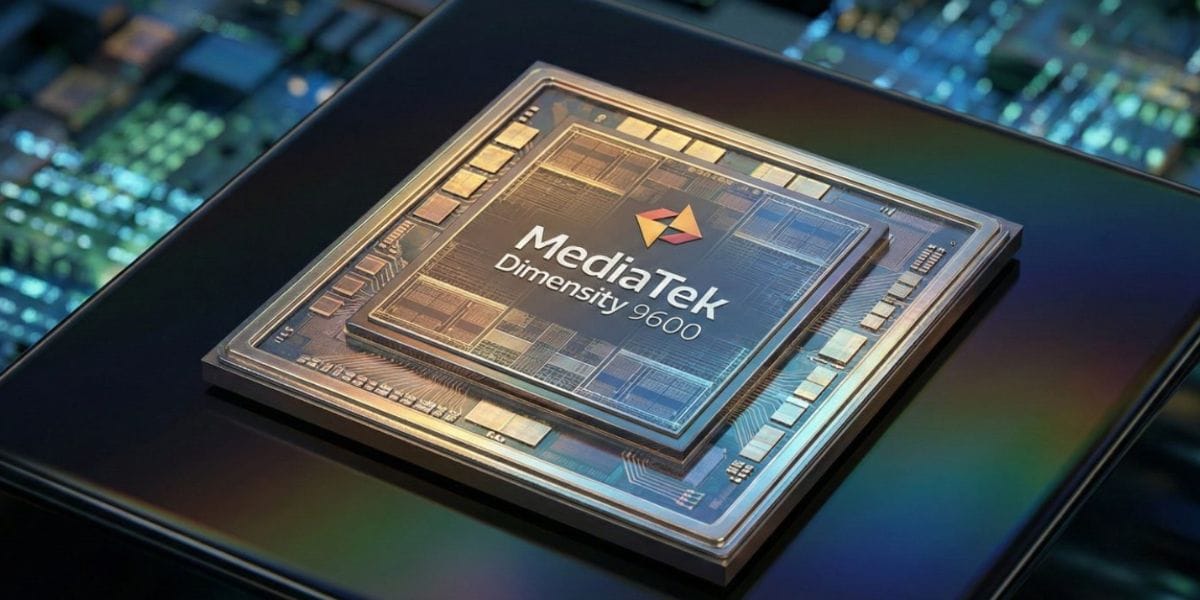
Google developed the smaller models in collaboration with its Pixel team, Qualcomm Technologies and MediaTek, focusing on efficient on-device AI.
Developers can access Gemma 4 through Google AI Studio, Android Studio and other platforms. The models are also available on popular tools like Hugging Face, Ollama and vLLM, with deployment options across Google Cloud services.
The Gemma 4 launch marks a major step in expanding open AI access while maintaining high performance and flexibility.
Are you still browsing through your broken screen? Don’t worry! Book at-home mobile phone screen repair with Cashify—an affordable and one-stop destination for all your mobile phone needs. In case you break your screen within 1 month of repair, we will replace your screen again—for FREE.