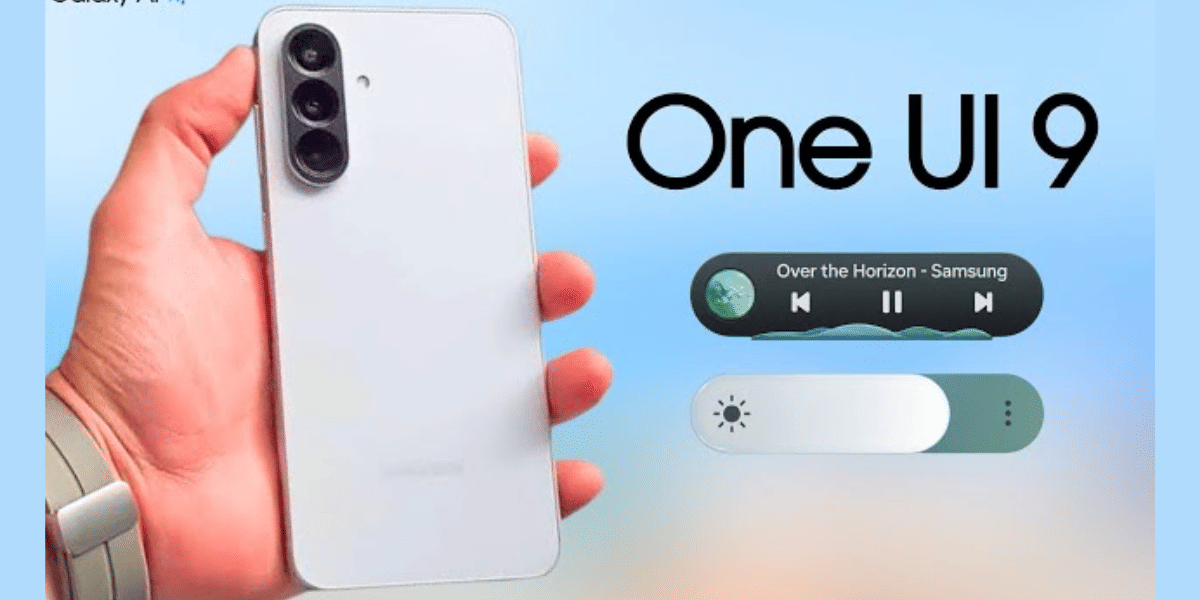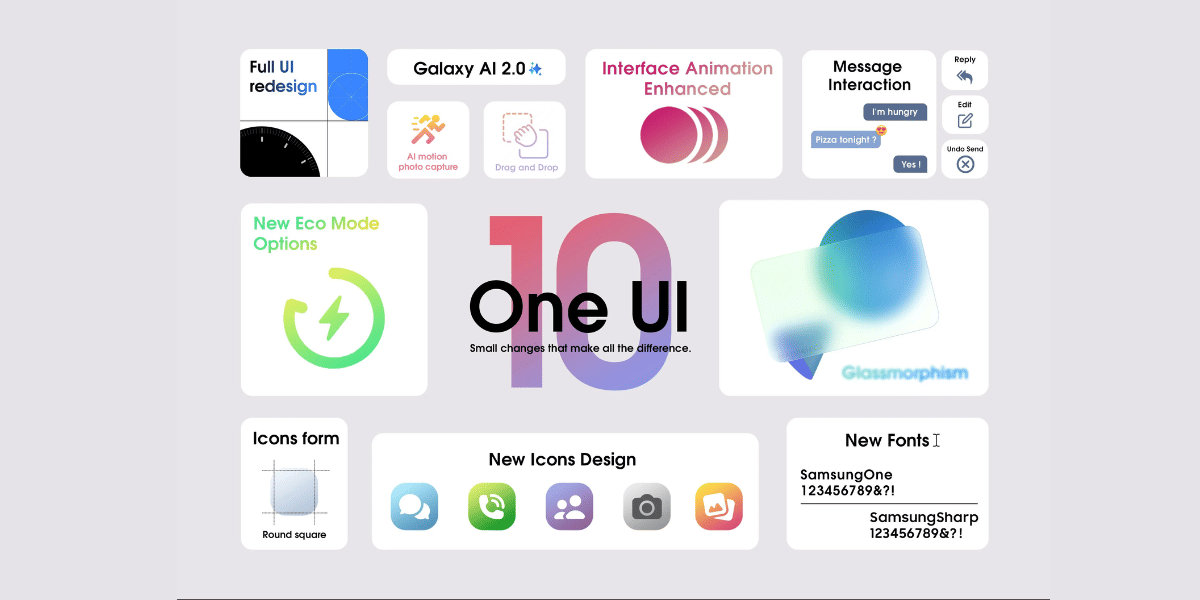


Samsung is ready to change far more than the appearance of One UI 10. The company’s new Fluid AI Design System in One UI 10 is expected to arrive alongside Android 18.
This is not just another visual refresh. The goal is to change how people interact with Galaxy devices every day. Instead of opening one app after another, the interface could automatically organise the information you need. This will be based on what you’re doing at that moment. If you are planning to buy a Samsung phone in future, this is one of the biggest software changes worth paying attention to.
Here’s everything you should know.
What Is Samsung Fluid AI Design System?
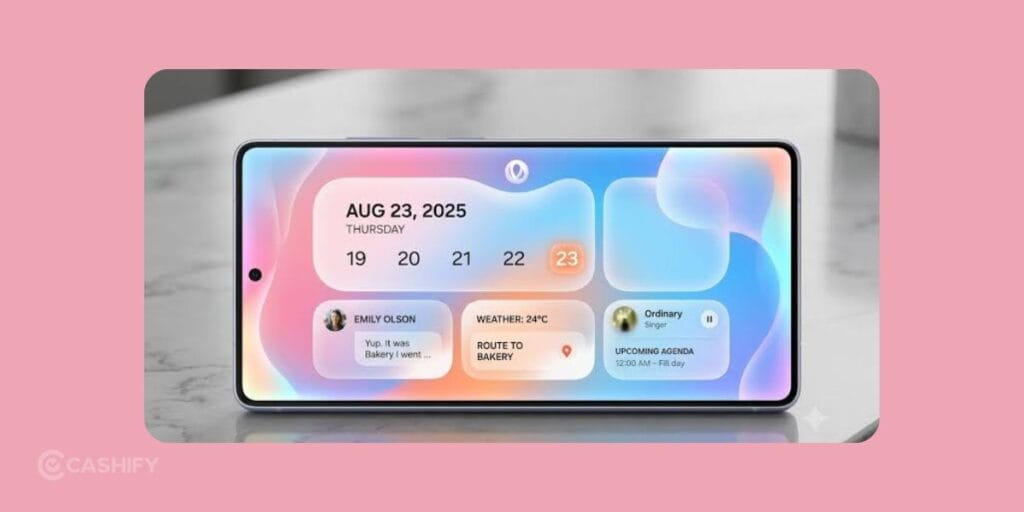
Fluid AI Design System is Samsung’s next-generation design concept for Galaxy devices. It replaces the traditional smartphone layout. Here, every app sits in its own fixed space. All apps move toward an intelligent interface that adapts in real time.
Rather than expecting you to jump between Calendar, Maps, Messages, Weather, Notes, and other apps, the system combines relevant information into a single workspace built around your current task. You can think of it as an interface that changes naturally throughout the day instead of remaining static from morning to night.
Samsung recently received a Red Dot Design Award 2026 recognition for this design philosophy. This adds credibility to the company’s long-term vision.
Samsung has introduced Fluid AI Design as a design concept. Many industry insiders expect it to become the foundation of One UI 10. But Samsung has not officially confirmed every detail of the rollout.
Also Read: Samsung One UI 10 Release Date And Expected Launch Timeline!
Why Samsung Wants to Change One UI 10
All the smartphones today rely on a design philosophy that hasn’t changed much in over a decade.
You unlock your phone.
You find an app.
You open it.
You repeat the same process several times until you complete one task.
That approach works, but it isn’t always efficient.
Samsung’s new direction focuses on reducing those extra steps. Instead of asking you to collect information from different places, the interface tries to organise everything automatically.
For example, imagine leaving work.
Instead of opening Maps, checking traffic, opening your calendar, reading recent messages, and checking the weather separately, the phone could display all of that information together on one intelligent screen.
That small change could save time dozens of times every day.
The Biggest Changes In Fluid AI Design: All Details
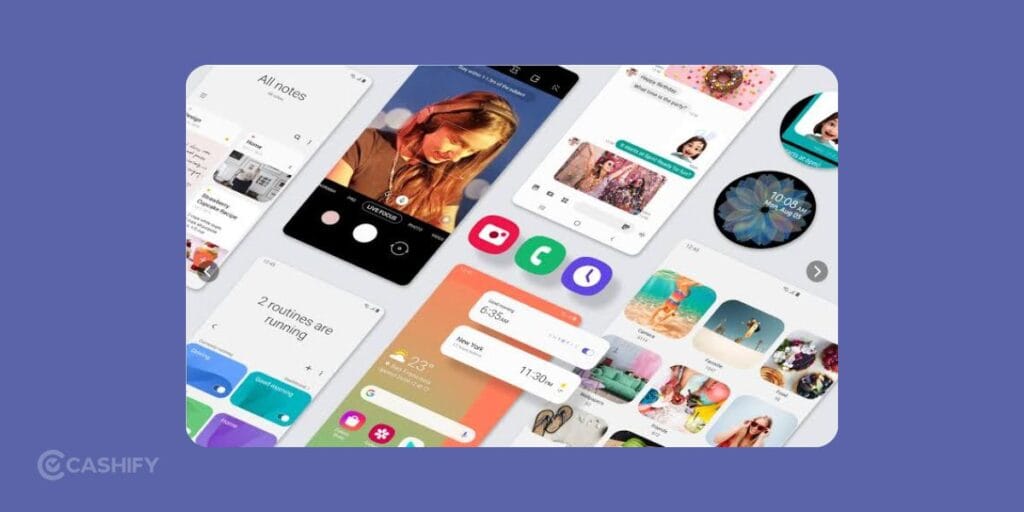
1. Generative User Interface
This is the biggest difference.
Instead of fixed layouts, the interface generates new screens depending on your activity, location, schedule, and habits.
No two situations need to look identical.
If you’re driving, navigation becomes the priority.
If you’re traveling, boarding passes, hotel details, weather, transportation, and reminders could appear together.
If you’re working, meetings, emails, notes, and tasks become the main focus.
The interface adapts instead of forcing you into one layout.
2. Task-Centered Experience
Current smartphones revolve around apps.
Fluid AI revolves around tasks.
That’s an important distinction.
Suppose you’re preparing for a meeting. Instead of opening several apps one after another, the phone could place your calendar event, meeting notes, recent conversations, navigation route, and reminder list into one dashboard. The entire experience becomes simpler because the phone understands what you’re trying to accomplish.
3. Floating Translucent Cards
Early previews show information appearing inside soft floating cards rather than rigid windows. These cards expand, shrink, move, or disappear. It depends on what matters most at that moment.
The design feels lighter and less cluttered than traditional app windows. If Samsung gets the animations right, Galaxy devices could feel much more fluid than current versions of One UI.
4. Ambient Lighting Effects
Another noticeable change is the visual style.
Instead of flat backgrounds, Fluid AI introduces subtle gradient lighting that blends naturally across the screen.
The result appears more modern without becoming distracting. It’s a small visual detail, yet it could make Galaxy phones feel newer even before you start using AI tools.
5. Smarter Galaxy Ecosystem Integration
Samsung already connects phones, tablets, watches, TVs, and laptops.
Fluid AI could take that much further.
The system may recognise nearby Galaxy devices and shift certain tasks automatically. That creates a smoother experience across Samsung’s ecosystem.
Also Read: One UI 9 Vs One UI 8.5: What’s New And Should You Upgrade?
Could This Be Samsung’s Biggest Software Upgrade?
It certainly has the potential.
Samsung already improved multitasking, customisation, and productivity through One UI.
Fluid AI could become the next major milestone.
Apple, Google, and Samsung are all moving toward interfaces that rely more on AI than traditional app navigation. Samsung’s concept appears one of the boldest so far. It changes the structure of the interface itself instead of simply adding AI tools inside existing apps.
If executed properly, this could become one of the biggest software changes since Samsung introduced One UI back in 2018.
Expected Release Timeline
Samsung has not officially announced One UI 10 or confirmed its complete design.
Industry reports currently suggest this roadmap:
| Expected Release | Software |
|---|---|
| Late 2027 (expected) | One UI 10 based on Android 18 (expected) |
If that timeline is accurate, eligible flagship Galaxy devices will likely receive the update first.
Expected devices include:
- Galaxy S24 series and newer
- Galaxy S25 series
- Galaxy S26 series
- Galaxy S27 series
- Galaxy Z Fold models
- Galaxy Z Flip models
- Galaxy Tab S10 series
- Galaxy Tab S11 series
- Selected premium Galaxy A series phones
Samsung could expand compatibility after official testing begins.
Things To Keep In Mind
It’s easy to get excited about leaked software.
At the same time, expectations should stay realistic.
Samsung has officially introduced Fluid AI Design as a design vision, but many details circulating online still come from industry leaks rather than confirmed announcements.
The final version of One UI 10 may change before public release.
Some concepts shown today may evolve. Others may never reach consumer devices. The whole concept is an early glimpse instead of a finished product.
Frequently Asked Questions
1. What is Samsung Fluid AI Design System?
Samsung Fluid AI Design System is a next-generation interface concept. It uses AI to create adaptive, task-focused experiences on Galaxy devices.
2. Will Fluid AI Design System come in One UI 10?
Fluid AI is expected to become part of One UI 10, but Samsung has not officially confirmed all details yet.
3. When will One UI 10 be released?
One UI 10 is rumoured to arrive in late 2027 alongside Android 18.
4. Which Samsung phones may get Fluid AI Design System?
Future Galaxy flagship phones, foldables, tablets, and selected premium Galaxy A series models are expected to receive it.
5. Should I wait to buy a Samsung phone for One UI 10?
Most buyers do not need to wait, as current flagship Galaxy phones should continue receiving software updates and remain capable devices.
Final Verdict
Fluid AI Design System has the potential to become Samsung’s most important software change in years. Rather than adding another collection of AI tools, Samsung is ready to rethink how people interact with their phones.
If the company turns this concept into a polished product, One UI 10 could feel faster, simpler, and far more intelligent than any previous Galaxy interface.
Also read: Samsung Galaxy S27 Ultra Release Date, Expected Price And Specs!
For anyone planning to buy a Samsung phone, this is something worth watching closely. A recent Galaxy flagship is a safe investment because it should stay ready for future One UI updates.
If you’ve just bought a new phone and don’t know what to do with your old phone, then here’s your answer. Sell old mobile to Cashify and get the best price for it. If you are planning to buy a new phone, check out Cashify’s refurbished mobile phones. You can get your favourite phone at almost half price with six-month warranty, 15 days refund and free delivery.