

If you’re planning to build a new PC, you’ve probably come across the discussion around DDR6 Vs DDR5 RAM. Every system relies heavily on fast and efficient RAM. A few years ago, DDR5 became the new standard for high-performance PCs. It had noticeable improvements in bandwidth and overall efficiency compared to DDR4. Now, people are discussing the difference between DDR5 and DDR6 RAM.
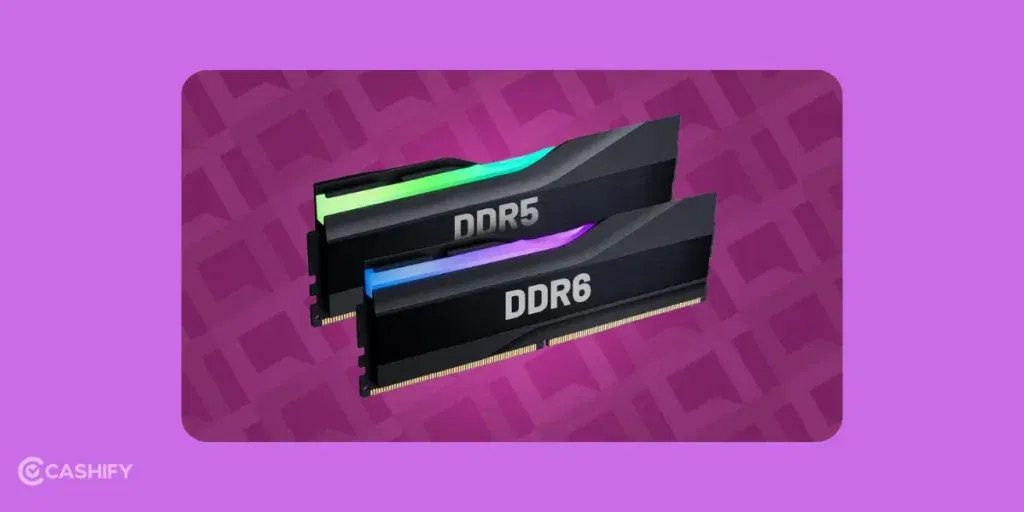
The DDR6 RAM release date suggests that the next generation of memory could bring cool upgrades. While DDR5 already is amazing for gaming rigs and productivity, DDR6 is expected to push those limits even further. In this article, we will talk about DDR6 vs DDR5 performance. Will the upgrade be dramatic, or just a small step forward? A lot of people search for should I buy DDR5 or wait for DDR6 if I’m building a new computer, this article has the answer! Let’s get started:
Also Read: OnePlus 16 Release Date In India: Expected Price, Camera, Specs!
What Is DDR5 RAM?
DDR5 is the current generation of memory used in many desktops and laptops. It got famous around 2021 or 2022. It is replacing DDR4 as manufacturers adopt the newer standard. When people compare DDR6 Vs DDR5 RAM, DDR5 is the latest widely available tech.
One of the biggest upgrades DDR5 introduced was higher memory speed. Standard DDR5 modules usually start at around 4800 MT/s (mega-transfers per second). However, many can reach 6000 to 8000 MT/s or even higher through tuning or overclocking.
Because of its faster data rates, DDR5 offers significantly higher bandwidth than previous memory generations. More bandwidth means the processor can move data between the RAM and CPU much faster. In many systems, DDR5 can deliver 50 to 100 percent more bandwidth than DDR4. It is one reason why the DDR6 vs DDR5 performance discussion is already gaining attention.
DDR5 also introduced several important architectural improvements:
- A single DDR5 module can support up to 128GB or even 256GB of memory.
- DDR5 includes on-die ECC (error correction). It helps detect and fix minor data errors automatically.
- DDR5 typically runs at 1.1V.
- Each memory module is divided into two smaller channels.
These improvements help systems multitask more smoothly. Games load faster, large applications run more efficiently, and demanding tasks feel more responsive.
What Is DDR6 RAM?
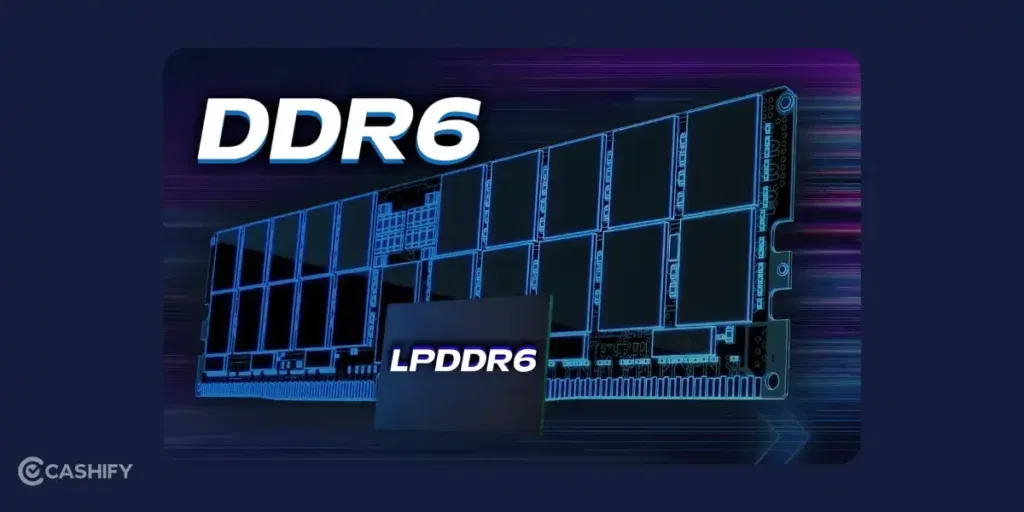
DDR6 RAM is the next generation of memory that will come after DDR5. Right now, it is not available on normal computers yet. The organisation called JEDEC is working on the DDR6 specifications. Samsung, Micron, and SK Hynix are already making early prototypes.
DDR6 will start appearing in some high-end systems around 2026. We can see this in most computers around 2027. Intel and AMD are expected to support DDR6 when it becomes available.
One of the biggest improvements is a much higher bandwidth. It may provide two to three times the bandwidth of DDR5. This means data can move much faster between the RAM and the CPU.
Other expected improvements include:
- Better power efficiency to make computers run faster while using less energy.
- Higher memory capacity will allow systems to use even more RAM.
- DDR6 is expected to use a 4×24-bit sub-channel architecture. It will help keep signals stable at very high speeds.
- Possible support for new memory form factors like CAMM2. It could allow thinner and more compact computer designs.
DDR6 will be able to handle AI, high-performance computing, and future gaming systems.
DDR6 Vs DDR5 RAM: Key Differences
Here’s all the differences between DDR6 Vs DDR5 RAM:
| Feature | DDR5 RAM | DDR6 RAM |
|---|---|---|
| Speed / Data Rate | 4800 to 8800 MT/s | 8800 to 17,600+ MT/s |
| Memory Bandwidth | ~100 to 128 GB/s (dual-channel) | 140 to 280+ GB/s (dual-channel) |
| Maximum Capacity | 128 to 256GB per module | 256 to 512GB+ per module |
| Latency (CAS / CL) | CL36 to 40 typical | Similar or slightly higher, but faster effective speed |
| Power Efficiency / Voltage | 1.1V | 1.0V or lower, 15 to 20 percent more efficient |
| Architecture | Dual 32-bit sub-channels | Quad 24-bit sub-channels (4×24-bit = 96-bit), CAMM2 possible |
| Availability | Widely available (2026) | Limited at first, mainstream ~2027 |
| Price | Moderate (~₹15,000 to 25,000 for 32GB kit in India) | Premium at launch, likely 50 to 100 percent higher |
| Compatibility | Current motherboards/CPUs | Needs new DDR6 motherboards and CPUs |
Also Read: Samsung Galaxy S26, S26 Ultra Price Comparison In Different Countries!
FAQs
Which Is better: DDR4, DDR5, or DDR6?
- DDR4: Good for older PCs. It is cheap but outdated.
- DDR5: Best choice today as there is a balanced performance, price, and availability.
- DDR6: Future king, expected in 1 to 2 years for ultra-high-end systems.
Can DDR5 be replaced with DDR6?
No. DDR6 requires new motherboards and CPUs. It’s not backward-compatible with DDR5 systems.
Should I buy DDR5 or wait for DDR6?
Go for DDR5. It’s mature, fast, and will perform well for years. Waiting for DDR6 only makes sense if you want cutting-edge memory in 2027+ and are willing to pay a premium.
Final Verdict
The DDR6 vs DDR5 RAM has some exciting stuff. In DDR6 you get faster speed, higher bandwidth, better efficiency, and better architecture. But for most users today, DDR5 is the smart and practical choice.
Also Read: Samsung Galaxy S26 Vs iPhone 17: Price, Specs, Honest Comparison!
When DDR6 finally arrives, it will be a powerful upgrade for enthusiasts and heavy users. Until then, DDR5 already handles gaming, content creation, and more in a decent way.
If you’ve just bought a new phone and don’t know what to do with your old phone, then here’s your answer. Sell old mobile to Cashify and get the best price for it. If you are planning to buy a new phone, check out Cashify’s refurbished mobile phones. You can get your favourite phone at almost half price with six-month warranty, 15 days refund and free delivery.