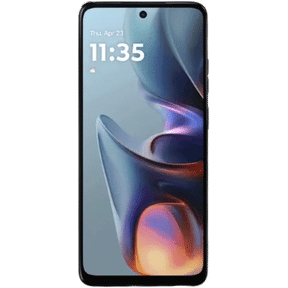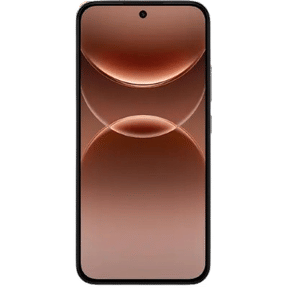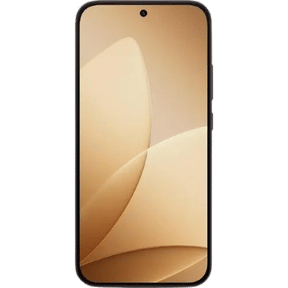


If you’ve used HyperOS for a while, you’ll probably notice something is different the moment you get your hands on HyperOS 4. It doesn’t feel like Xiaomi has simply added a few new features and called it an update. The interface looks noticeably different. Animations feel more polished. Xiaomi has put a much bigger focus on AI and how your phone works with other devices.
The biggest visual change is the new Life Aesthetics design, built around what Xiaomi calls Soft Light Glass. But there’s more happening underneath that new look. HyperOS 4 is based on Android 17. So, it brings performance tweaks, smarter memory management, and more flexible customisation. On top, there’s an upgraded Super XiaoAi 2.0 assistant, and several new cross-device features.
I’ve gone through the major HyperOS 4 new features to break down what’s actually new, what could make a difference in everyday use. Also, which features you may not get depending on your Xiaomi, Redmi or POCO phone.
Here’s everything you need to know before the update reaches your device.
The first HyperOS 4 beta rollout began in China on August 14, 2026. Starting with select Xiaomi 17, Redmi K90 and Xiaomi Pad 8 devices.
Top HyperOS 4 New Features at a Glance
Here are some of the biggest changes coming with HyperOS 4:
- New Life Aesthetics design with Soft Light Glass
- More customizable lock screen
- Stacked notifications
- Resizable folders and widget stacking
- Redesigned Control Centre
- More than 130 HyperIsland services
- Faster app launches and improved memory management
- Smarter Super XiaoAi 2.0
- New AI Inspiration Ball
- AI-powered research, PPT and webpage creation
- Improved Notes and Recorder features
- Better phone, tablet and PC connectivity
- Dual-phone call and SMS sharing in supported regions
- Improved privacy controls
Let’s look at these features in detail.
1. HyperOS 4 Gets New Life Aesthetics Design
The most noticeable HyperOS 4 feature is its redesigned user interface.
Xiaomi calls the new design language Life Aesthetics, with Soft Light Glass at its centre. The interface uses translucent surfaces, layered elements, blur, lighting and depth. All of it makes different parts of the system feel more connected.
You will see these changes across:
- Control Center
- Notifications
- Folders
- Widgets
- Cards
- Menus
- Lock screen
- Home screen
The interface can also respond to the wallpaper and user interactions with changing lighting and transparency effects.
Is HyperOS 4 copying Apple’s Liquid Glass?
The visual direction is clearly similar to the translucent glass aesthetic popularised by Apple’s recent software design. But Xiaomi calls it Soft Light Glass and gives it its own animations and interaction effects.
One important thing to remember is that not every Xiaomi phone will get the full visual experience.
Xiaomi says the complete Soft Light Glass effects require higher-end hardware. That includes devices using Snapdragon 8 Elite-class chips, Dimensity 9500-class flagship platforms or supported XRING platforms.
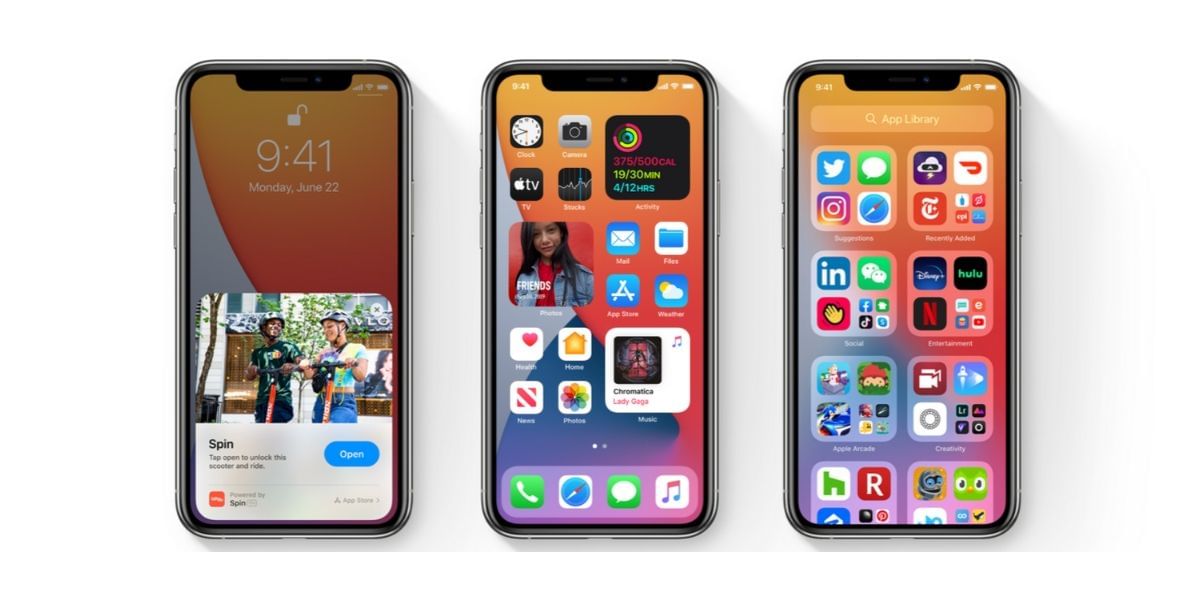
2. More Customisable Lock Screen
HyperOS 4 gives the lock screen considerably more flexibility.
With this HyperOS 4 new features, users can adjust elements such as the clock, date, notifications and widgets, depending on the device.
The update also introduces stacked notifications.
Instead of having several notification cards spread across the lock screen, notifications can be grouped vertically. This makes the screen look cleaner and makes scrolling through notifications easier. Particularly when using the phone with one hand.
However, Xiaomi notes that some advanced lock-screen clock features are limited to supported models, particularly certain flagship devices.
3. Resizable Folders and Widget Stacking
Your home screen gets more flexible with HyperOS 4.
Resizable folders
You can resize supported folders instead of being restricted to one fixed folder size.
For example, you could make a folder larger if you frequently access several apps inside it.
Supported layouts can include configurations such as:
- 2×2
- 2×3
- 3×3
Widget stacking
HyperOS 4 also introduces widget stacking on supported devices.
Instead of using separate spaces for multiple widgets, you can place several widgets in the same area and swipe between them.
So, for example, your weather, calendar and reminders can occupy one widget space rather than taking up three separate areas of the home screen.
Some of these customisations
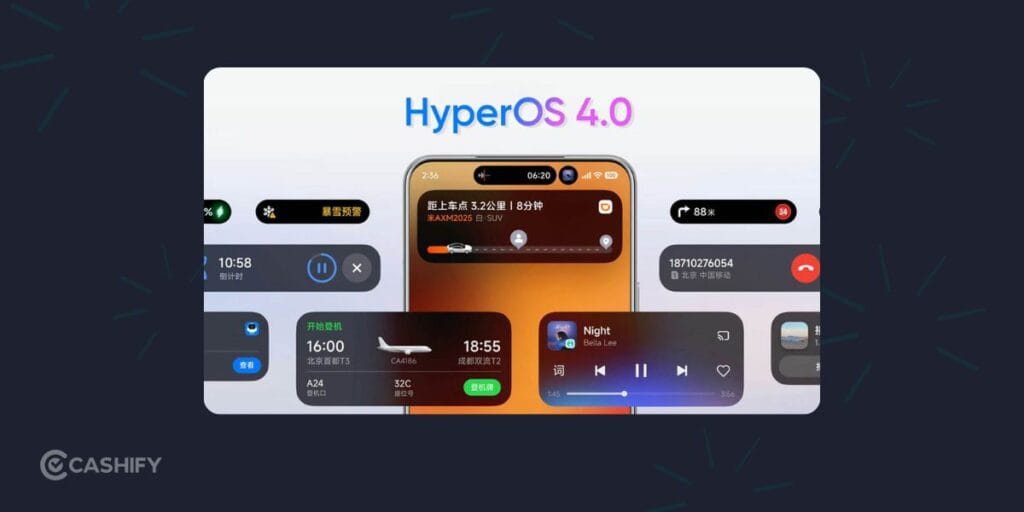
5. HyperIsland Expands to More Services
Xiaomi is also expanding its HyperIsland, the live-activity-style area around the phone’s punch-hole camera.
HyperOS 4 supports more than 130 services, according to Xiaomi’s official information as of July 31, 2026.
Depending on the supported app or service, HyperIsland can display information such as:
- Timers
- Navigation
- Screen recording
- Deliveries
- Live activities
- Other real-time updates
Xiaomi has also added a dedicated settings page to manage supported HyperIsland services.
Another handy addition is the ability to use a three-finger gesture for scanning QR codes, tickets and similar information into passes.
Options are region- and device-dependent.
6. HyperOS 4 Promises Better Performance
Performance improvements are another major part of HyperOS 4.
Xiaomi has upgraded its HyperCore system with features including precise workload calculation, AI-based memory preloading and a redesigned application runtime environment.
According to Xiaomi’s internal testing, HyperOS 4 delivered:
| Performance area | Xiaomi’s claimed improvement |
|---|---|
| App launch time | Up to 17.5 percent faster |
| Available RAM after 8 hours | Up to 27.2percent higher |
| Instruction load | Around 14.4 percent lower |
| Frame drops during long use | Up to 28.9 percent fewer |
| Camera cold start | Around 225ms faster in the cited test |
| HDR processing | Around 23 percent faster |
For example, Xiaomi’s test of launching 30 apps after nine hours of use took 169.4 seconds on HyperOS 3. On the other hand it’s 139.7 seconds on HyperOS 4.
What does that mean in everyday use?
Ideally, apps should feel quicker to open, animations should remain smoother after prolonged use, and the phone should manage background apps more efficiently.
However, these are Xiaomi’s controlled laboratory results, so actual performance will vary depending on the phone, chipset, apps and usage pattern.
7. Camera and Gallery Performance Also Gets Faster
HyperOS 4’s performance improvements aren’t limited to app launches.
Xiaomi says its testing showed faster camera startup and HDR processing under heavy workloads. In one test, camera cold-start time dropped from 1,043.6ms to 808.8ms, while rear-camera HDR processing went from 313.38ms to 240.16ms.
Gallery performance has also been optimised, particularly when dealing with large photo libraries.
That could make scrolling through thousands of photos or indexing a large gallery feel noticeably smoother on supported devices.
8. Super XiaoAi 2.0 Is One of the Biggest HyperOS 4 New Features
Perhaps the most important upgrade in HyperOS 4 new features is Super XiaoAi 2.0.
Xiaomi has upgraded its assistant using the Xiaomi MiMo large language model, giving it more conversational and task-oriented capabilities.
Instead of simply answering a question, the assistant is designed to perform multi-step tasks across apps.
For example, you could give it a complicated request and have it handle several steps instead of manually opening different applications.
9. AI Inspiration Ball Can Understand What’s on Your Screen
One of the more interesting HyperOS 4 AI features is the Inspiration Ball.
It can analyse content displayed on your screen and let you perform actions based on what you’re looking at.
For example:
- You see an address in a message? Point to it, ask XiaoAi to navigate there.
- You see a product you like? Point to it, ask XiaoAi to find the same or a similar product.
- You see a photograph? Point to it, ask the AI to edit it.
This makes the AI more context-aware rather than forcing users to copy and paste information between apps.
Xiaomi says the Inspiration Ball is scheduled for OTA availability from September 2026, and its availability can vary by device.
10. HyperOS 4 Introduces an AI Expert Mode
Super XiaoAi 2.0 also gets an Expert Mode.
According to Xiaomi, Expert Mode can help generate:
- Deep research reports
- Presentations
- Websites
- Videos
- Summaries
- Other structured content
For example, instead of asking an AI chatbot to simply explain a topic, you could ask it to research the topic and produce a structured report.
Similarly, a prompt such as “Create a presentation about Xiaomi’s HyperOS evolution” can be used to generate a PPT-style presentation.
As with any generative AI feature, users should still verify important information before relying on the output. Xiaomi itself notes that AI-generated results can contain errors or incomplete information.
11. AI Gets Integrated Into System Apps
AI isn’t restricted to XiaoAi. HyperOS 4 adds AI-powered features to several system applications.
Recorder
The Recorder app can:
- Identify meeting content
- Extract key points
- Generate outlines
- Help with speaker identification
- Skip silent portions
Notes
The Notes app gets:
- Voice note support
- AI organisation
- Summaries
- AI conversations
- Structured templates
Keyboard
The Super XiaoAi input method can help with:
- Voice-to-text
- Text polishing
- Better expression
- Chinese-English translation
Some of these AI functions are currently focused on the Chinese version of HyperOS 4, so global users shouldn’t assume every feature will be available on day one.
12. Two Xiaomi Phones Can Share Calls and SMS
One particularly interesting HyperOS 4 feature is dual-phone call and SMS sharing.
If you have two supported Xiaomi phones connected to the same Xiaomi account, incoming calls and SMS verification codes can be shared between the devices.
So, if your primary phone is charging in another room, you could potentially receive the call or verification message on your second Xiaomi phone.
However, this feature is currently associated with the Chinese rollout and requires supported devices, internet connectivity and the necessary permissions.
HyperOS 4 vs HyperOS 3: What’s New?
| Feature | HyperOS 3 | HyperOS 4 |
|---|---|---|
| Android base | Android 16 | Android 17 |
| UI design | Existing HyperOS design | Life Aesthetics + Soft Light Glass |
| Lock screen | Standard customization | More flexible customisation |
| Notifications | Conventional layout | Stacked notifications |
| Folders | Standard | Resizable folders |
| Widgets | Standard | Widget stacking on supported devices |
| AI assistant | Super XiaoAi | Super XiaoAi 2.0 |
| AI task execution | More limited | Cross-app task orchestration |
| Performance | – | Improved memory, app launch and frame performance |
| Cross-device features | HyperConnect | Expanded HyperConnect ecosystem |
| AI content generation | Limited | Research, PPT, webpage and other generation |
| HyperIsland | Existing services | 130+ supported services |
Frequently Asked Questions About HyperOS 4
What is HyperOS 4 based on?
HyperOS 4 is based on Android 17 and adds Xiaomi’s own HyperCore optimisations, new interface design and AI capabilities.
Is HyperOS 4 faster than HyperOS 3?
According to Xiaomi’s internal testing, yes. Xiaomi reports faster app launches, improved memory availability and fewer frame drops compared with HyperOS 3. Actual improvements will vary by device and usage.
Will HyperOS 4 come to Redmi and POCO phones?
HyperOS 4 is being rolled out across supported Xiaomi, Redmi and POCO devices, but the exact update schedule and available features depend on the model and region.
Will all phones get the Soft Light Glass design?
No. Xiaomi says some advanced Soft Light Glass effects require higher-end hardware. Lower-end and mid-range devices may receive a scaled-down visual experience.
Is Super XiaoAi 2.0 available globally?
Not necessarily in the same form. Several advanced XiaoAi features are currently tied to the China version, so global availability can differ.
Is HyperOS 4 available now?
The HyperOS 4 beta began rolling out in China in August 2026. Stable and global availability depends on the device and region.
Final Thoughts
Yes, HyperOS 4 is a substantial upgrade over HyperOS 3.
The new interface will probably be the first thing users notice, but the more meaningful changes are happening underneath it. Xiaomi is improving memory management, app performance and long-session stability while simultaneously turning Super XiaoAi into a much more capable AI assistant.
The bigger ambition is clear. HyperOS 4 wants your Xiaomi phone to do more than display apps. It wants the software to understand what you’re trying to accomplish and help complete the task.
Just keep one thing in mind. The HyperOS 4 experience will vary considerably between flagship, mid-range and budget devices. Also, between China and global versions.
So if you’re waiting for the update, don’t judge HyperOS 4 only by the headline features. Your phone model and region will ultimately determine which of them you actually get.
If you’ve just bought a new phone and don’t know what to do with your old phone, then here’s your answer. Sell your old mobile to Cashify and get the best price for it. If you are planning to buy a new phone, check out Cashify’s refurbished mobile phones. You can get your favourite phone at almost half price with a six-month warranty, 15-day refund and free delivery.