

A ₹200 AirPods Pro clone that looked almost identical. How many non-techies can actually identify that these are not original AirPods? I experienced this myself while visiting Delhi’s counterfeit gadget markets.
Counterfeit products have become one of the biggest problems in India, yet the issue still lacks major headlines and strong legal barriers. In a developing country, a large section of the population still cannot afford luxury gadgets, and many buyers also lack the technical knowledge to distinguish between original and counterfeit products.
In 2026, the market for fake gadgets is growing quickly. This includes selling fake products online and on the streets, reaching people from many different income levels. In this article, I will look at India’s fake gadget market, why it is growing, and what can be done about it. I also bought a fake product during my visit to the Nehru Place market, and I will share my experience. Read the full article to learn how this hidden tech market really operates.
Also Read: How Cashify Maintains High Repair Quality Standards: OEM vs Compatible Parts!
Why Counterfeit Tech Is Everywhere
There are multiple reasons behind the rapid growth of fake gadgets in India.
1) Luxury Aspirations + Budget Gap
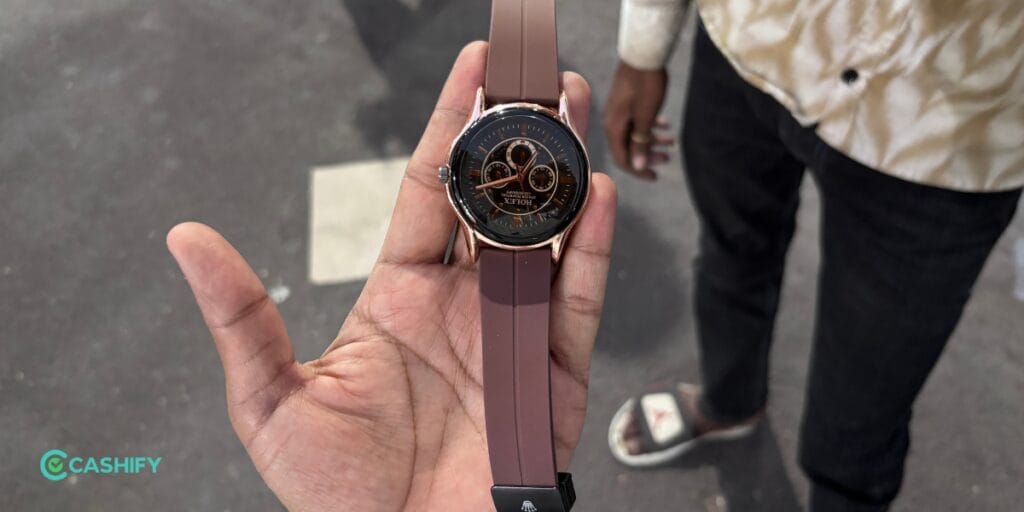
In India, a large section of the population still cannot afford luxury or premium-priced products. Many buyers want premium-looking gadgets but cannot afford original devices. As a result, counterfeit sellers easily target consumers through fake gadgets. According to a report by CRISIL (a global analytical company) and ASPA (the Authentication Solution Providers’ Association in India) in 2022, “51% of consumers buy fakes because of lower costs,” the highest cost-driven percentage across several sectors.
2) Lack Of Awareness
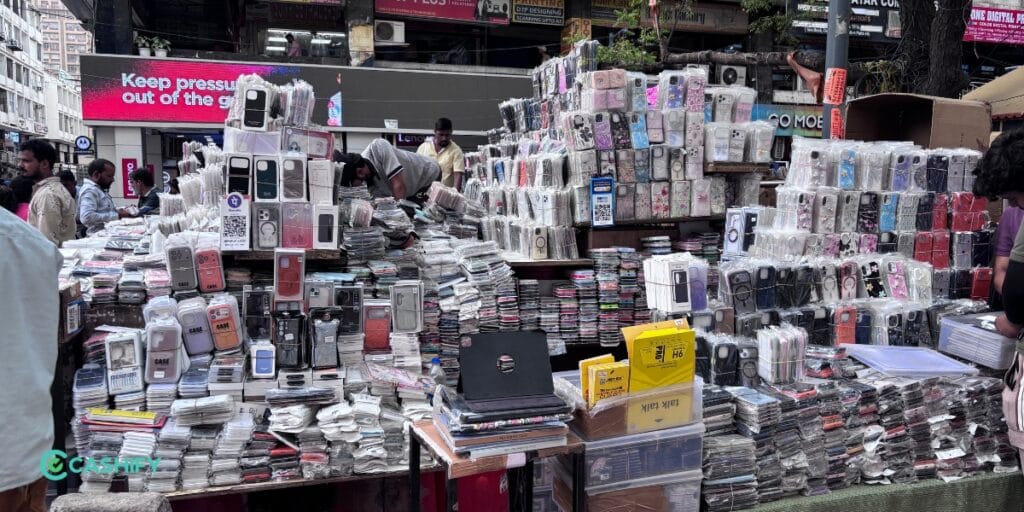
A lack of awareness is also one major reason why many Tier 2 and Tier 3 consumers cannot identify clones. Most users still cannot easily tell whether a gadget is original or fake. The reason is that many counterfeit gadgets are designed to look extremely similar to the original products. However, when you dig into the details, you may identify that the product is fake.
Moreover, counterfeit sellers also target accessories such as USB cables, adapters, covers, batteries, and other phone parts. These products have high demand among regular consumers, many of whom pay little attention to originality due to limited awareness.
3) Social Media Influence
Reels and YouTube Shorts are also aggressively promoting “cheap Apple products.” If you are even slightly active on Instagram or Facebook, then I am quite sure you have seen ads for fake Apple AirPods or AirPods Max clones. Most of these lesser-known brands sell products between ₹2,000 and ₹5,000.
These sellers often showcase iPhone connection pop-ups, nearly identical designs, and “premium sound quality” to convince users to buy. Apple is just one example, as it is the most common, but many other fake accessories and counterfeit smartphones are also openly sold on social media reels due to the weaker enforcement of such advertisements.
4) Weak Enforcement In Local Markets
Delhi Police often conduct raids on counterfeit markets to stop the sale of counterfeit gadgets. However, due to weak enforcement in local markets, counterfeit products return very quickly.
I also spoke with a counterfeit-product seller in Gaffar Market, who told me that sellers often receive advance notice of police raids. Because of this, many shops hide fake products before the police arrive.
Another major loophole is brand spelling manipulation. For example, sellers may use names like “Samugsam” instead of “Samsung” while keeping the product design almost identical to the original. Similarly, fake Realme power banks may be sold under names like “Reelme.” These small spelling changes make it harder to classify products as counterfeit outright, allowing sellers to continue operating openly.
5) Easy Online Availability
Telegram channels, WhatsApp groups, Facebook Marketplace, and unverified online marketplaces are filled with fake sellers who help distribute counterfeit gadgets across India. Many of these sellers specifically target buyers in Tier 2 and Tier 3 cities, where awareness and verification checks are often lower.
Also read: Cashify Repair: Unveiling Repair Timelines and Quality Parts
How The Counterfeit Gadgets Network Works
The entire counterfeit gadget ecosystem revolves around offering products at lower prices while conveying a similar sense of originality or luxury. In this case, the cheaper Chinese electronics market comes to the forefront. Many counterfeit sellers in Gaffar Market and Karol Bagh import similar-looking gadgets from China, then slightly modify the packaging and branding before selling them locally to target aspiring customers.
In some cases, counterfeit products are also assembled locally using imported parts, duplicate packaging, and copied branding materials.
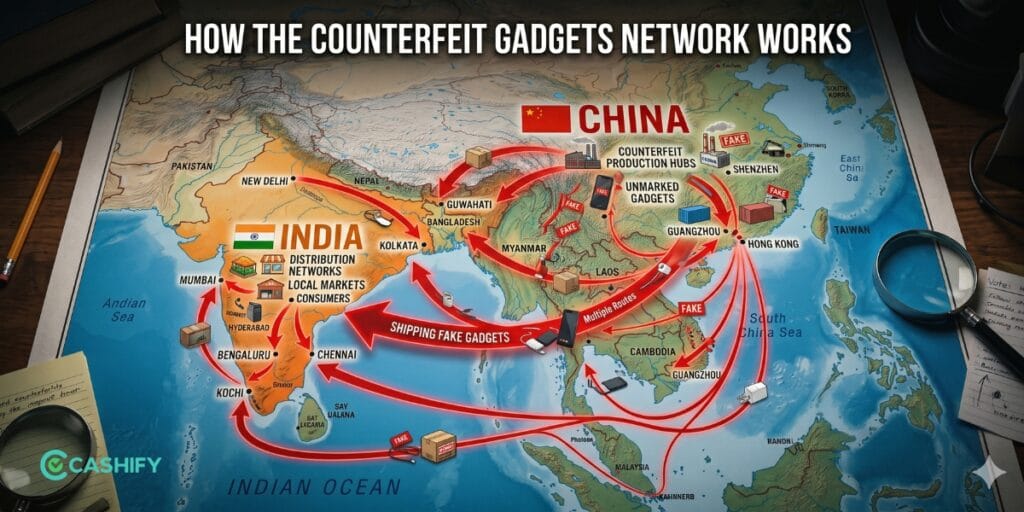
According to a 2025 World Trademark Review report, over 80% of counterfeit goods worldwide are made in China. The country’s vast manufacturing capacity and fast-moving export channels make it the centre of the global counterfeit trade.
China is considered the main source of counterfeit goods worldwide. A 2023 report from the U.S. Trade Representative stated that 84% of the total value and 90% of the total quantity of counterfeit goods seized by U.S. Customs in 2023 came from China and Hong Kong.
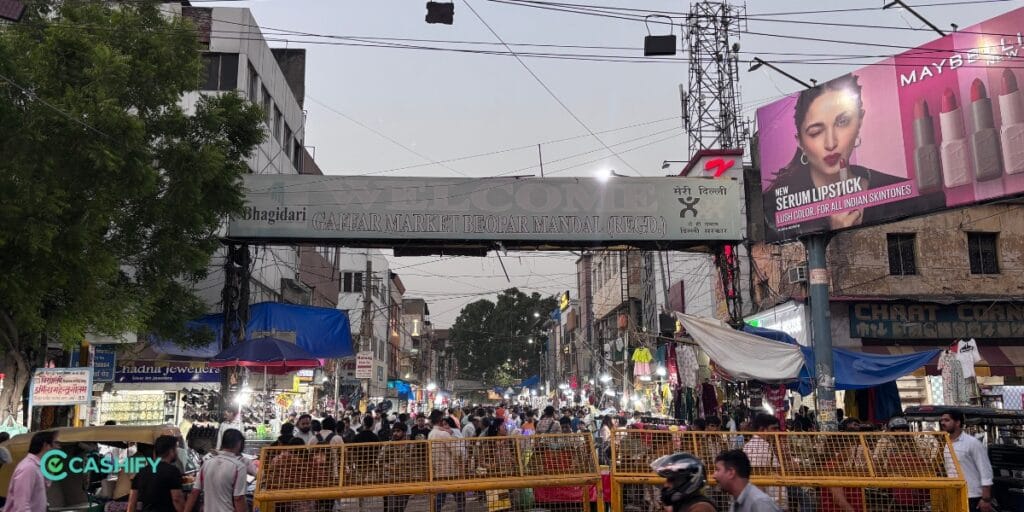
India’s weaker law enforcement and import loopholes are also major reasons behind the growth of counterfeit products in the country. This issue is not limited to markets like Karol Bagh and Gaffar Market. Even well-known brands like boAt and GoBOLT, as well as products like Anarc by Tech Burner, and AI+ by Madhav Seth, have previously been discussed in relation to rebranding Chinese-manufactured products.

However, this should not be confused with direct counterfeit operations, as an OEM (Original Equipment Manufacturer). Note that white-label manufacturing are legal business practice widely used across the global electronics industry. Still, the similarity in product designs and sourcing ecosystems often confuses consumers.
Recent Incidents And Police Crackdowns
The recent crackdown in Delhi shows that local police are actively working to bust the counterfeit gadget market in India. One of the biggest crackdowns happened in Delhi on May 10, 2026. According to ANI, “AGS Unit of Delhi Police Crime Branch sealed two godowns and one factory linked to counterfeit products and packaging material of reputed mobile brands such as OPPO, OnePlus and Realme.”
#WATCH | Delhi | In a major crackdown and search-cum-seizure operation, a huge quantity of counterfeit products of OPPO, OnePlus and Realme brands was recovered. Two godowns located in Regharpura, Karol Bagh, where these fake products were being packaged and branded, were sealed.… pic.twitter.com/P5FYwtPrwj
— ANI (@ANI) May 10, 2026
Moreover, Akis Evangelidis, co-founder and president of Nothing India, also shared a video of a raid on a counterfeit market in Delhi, coordinated with partners, local authorities, and the Delhi Police. The company has frequently highlighted fake products sold under the Nothing brand, including those that were never officially released.
Some of the fake adapters and earbuds look extremely similar to the originals, making it difficult for ordinary consumers to tell whether they are genuine or counterfeit.
Despite repeated raids, counterfeit gadgets continue to return because demand remains high. I visited several local markets where counterfeit products are still openly sold.
One major reason behind this is the combination of high demand and strong profit margins at lower costs. Many sellers do not fear fines or short-term jail punishment because the returns from counterfeit products are often significantly higher.
Also read: Cashify’s Approach to Using Genuine Parts: Truth Behind It
I Visited Delhi’s Biggest Counterfeit Gadget Markets
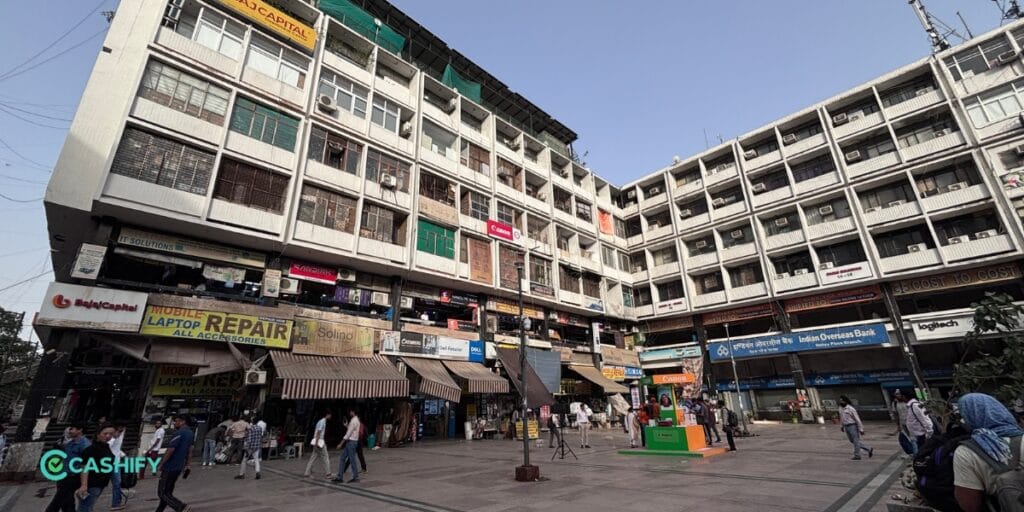
I visited multiple markets in Delhi that are widely known for counterfeit gadgets, including Karol Bagh, Gaffar Market, Sarojini, Nehru Place, and Old Delhi. Interestingly, the CRISIL ASPA report states that only 15% of surveyed consumers in Delhi NCR reported personally encountering counterfeit electronics. However, the same report also identifies “Nehru Place and Ghaffar Market in New Delhi” as some of India’s “most popular notorious hubs for counterfeit, smuggled, and cheap-grade electronic products.”
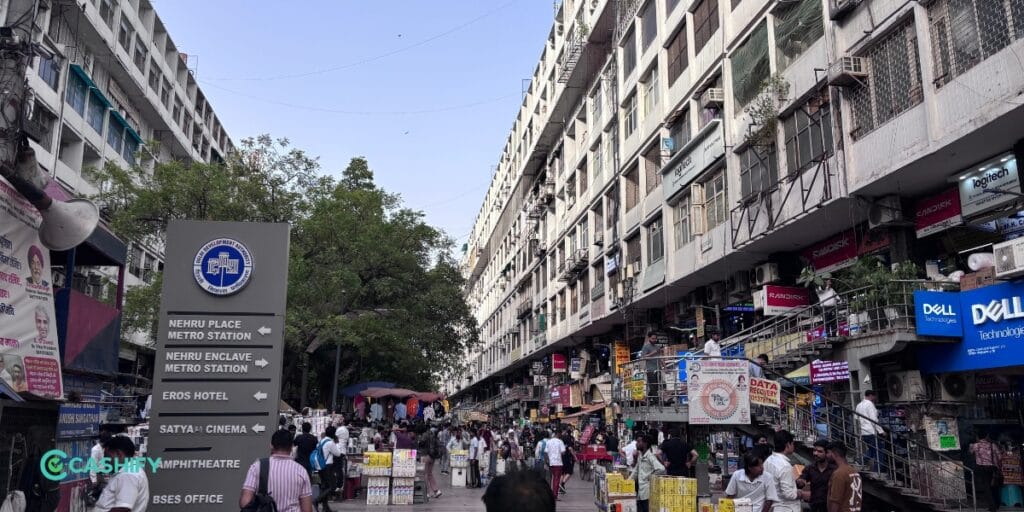
I also wanted to visit the famous “Chor Bazaar” in Delhi, but I could not manage it due to the early-morning timing and some unexpected circumstances. Anyway, in almost every market, I observed that sellers mostly target the mobile accessories category.
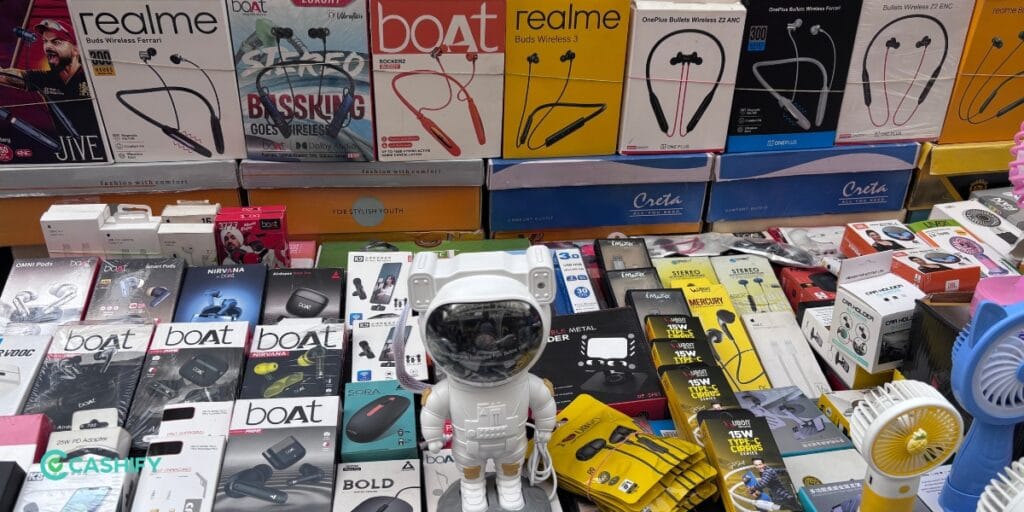
Fake Apple iPhones, earbuds, neckbands, USB cables, adapters, and power banks were among the most commonly available products. Especially, Nehru Place is a major hub for electronics and computer-related products.
My Experience
I am also sharing a personal experience related to laptop repair. A few months ago, I visited Nehru Place to replace my laptop’s HDD with an SSD. The shopkeeper convinced me to install an SSD at a reasonable price and assured me that if anything went wrong, I could visit the store again because the product came with a 6-month warranty. He even provided me with a receipt for the SSD.
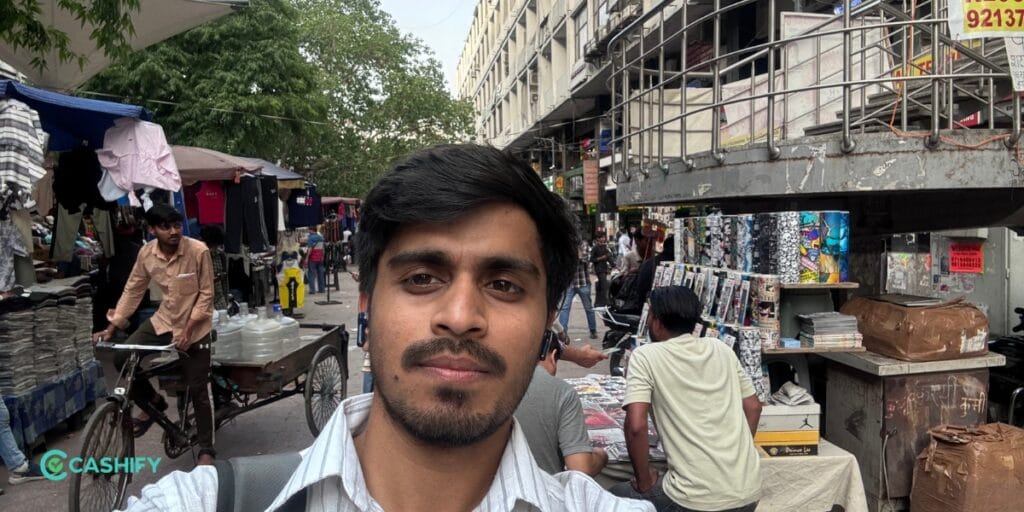
However, within just a week, the new SSD crashed. When I returned to the same shopkeeper with the replacement receipt, he deliberately refused to help. He even denied that they had changed my laptop’s SSD and instead suggested that I visit the official SSD company service centre directly.
Eventually, after multiple visits to the SSD company’s service centre, I finally managed to get the replacement. This experience showed me how difficult after-sales support can become in such markets, even when a receipt or local warranty is provided.
My second and more recent experience happened in Nehru Place. When you visit counterfeit markets, sellers often display “original” Apple iPhone 17 models at the front of shops with claims like “Buy at just ₹15,000.” In many cases, this acts as a trap to attract and engage potential customers.
Once a buyer shows interest, the seller may ask them to move to another shop for “original billing work,” where the real game begins. Some sellers then demand an additional ₹20,000 to ₹25,000 for random registration or documentation charges.
If a buyer already shares original documents like Aadhaar or PAN details for billing purposes, they may become vulnerable to fraud or financial scams. If you are well aware of such tactics, you may avoid the trap, but less aware customers could potentially lose both money and the device.
I Bought A Fake Gadget To Test It
I also bought a pair of AirPods Pro from Nehru Place for just 200 rupees, while the scammer initially quoted a price of 2,000 rupees. He claimed that he had received “Airport custom stock” at a very low price, which is why he was selling “original” AirPods Pro so cheaply. This was mainly done to build trust with the customer.
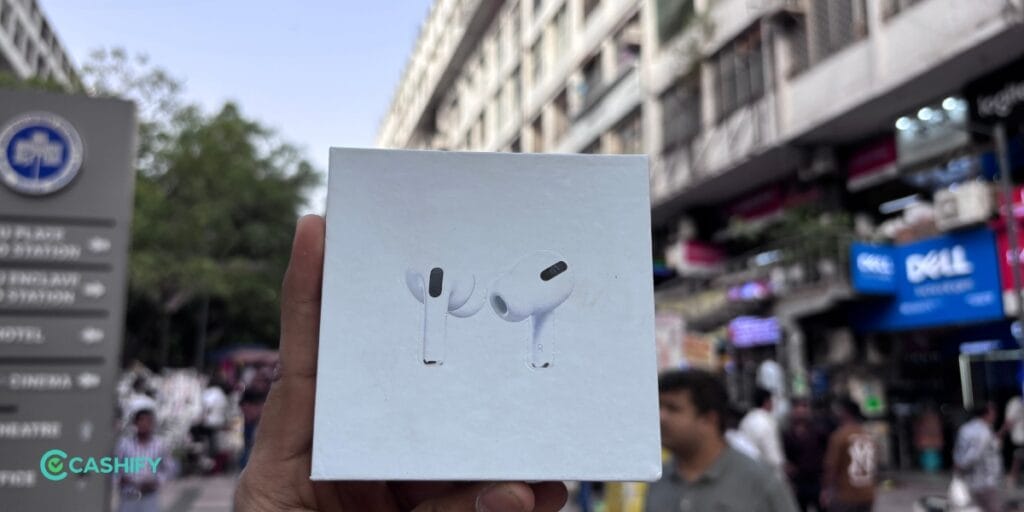
A funny thing happened when I visited Gaffar Market: a scammer started bidding to sell AirPods Pro for 1200 rupees and ended up at 100 rupees. But I already bought it from Nehru Place at just 200 rupees. So, I’ve already scammed 100 rupees between two markets.
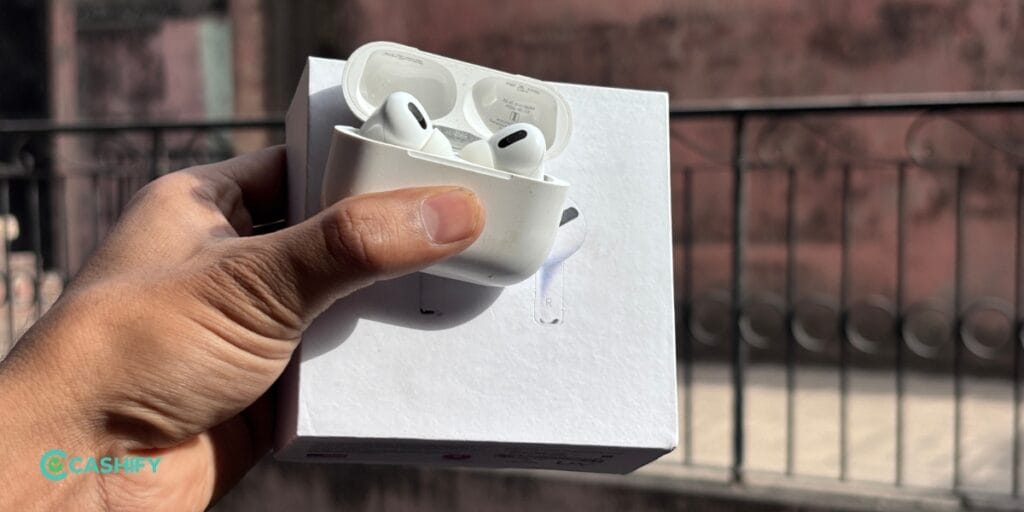
Honestly, if you are unaware of these types of scams, you can easily get trapped after seeing a box and earbuds that look almost identical to the original ones. I am already an Apple iPhone 15 user, so even the connection pop-up looked surprisingly real.
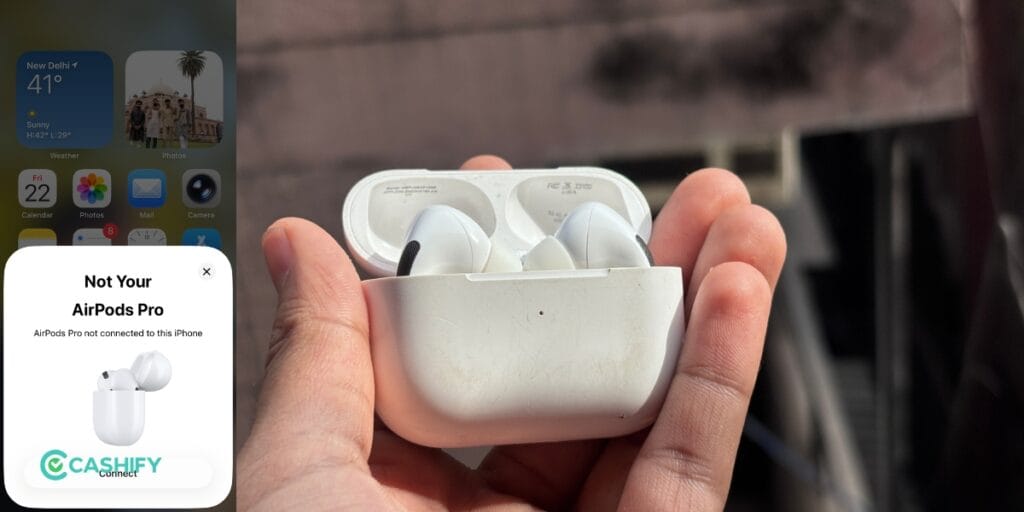
I even checked the serial number, and it showed that the AirPods Pro warranty coverage had already expired in 2023, while the displayed purchase date was January 1, 2026.
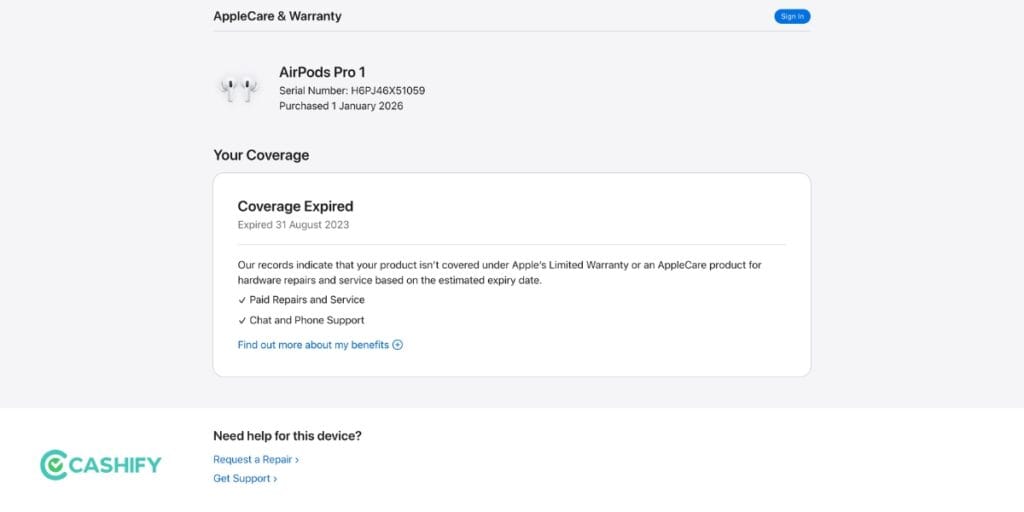
At that point, I genuinely could not understand what the actual reality was. To understand this further, I even tried contacting Apple Support while writing this article, but I did not receive a response.
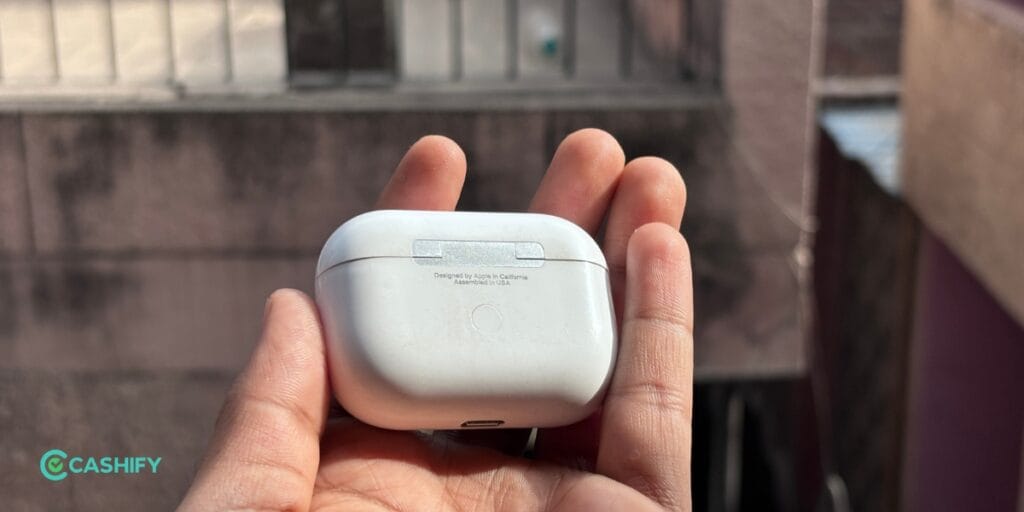
However, the sound quality was completely terrible. There was almost no balance between bass, vocals, and treble, clearly showing the difference between a counterfeit product and an original premium audio device.
Counterfeit Gadgets In India Beyond Delhi Markets
Crowded railway stations, local markets, bus stands, and transit hubs often become hotspots for counterfeit gadget sales. It’s because buyers are usually looking for affordable deals and quick purchases. I live in a rural area and often travel between Delhi and my hometown by train and bus, where I have personally encountered many counterfeit gadget sellers.
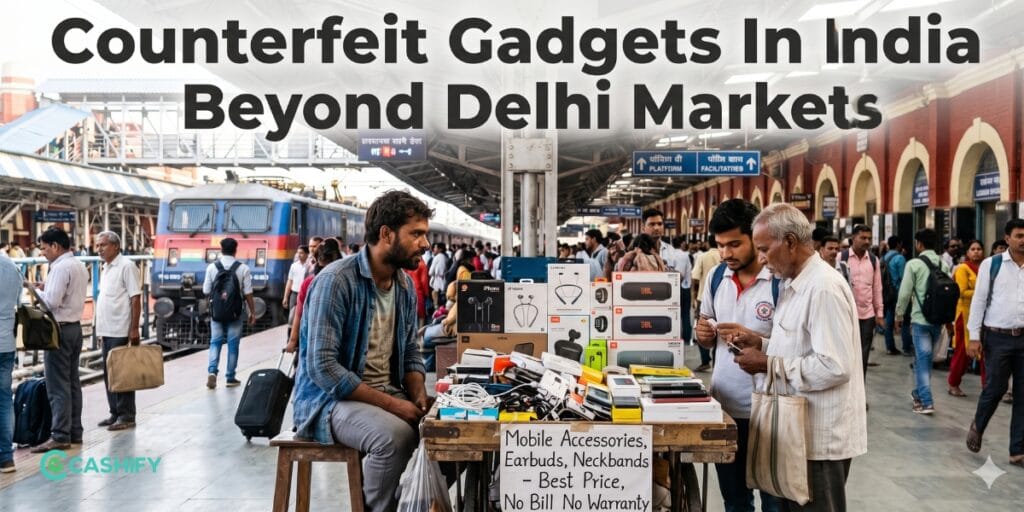
From station to station and across bus stops, cart vendors openly sell counterfeit earbuds, neckbands, smartwatches, power banks, USB cables, and sometimes even mobile phones. Many of these sellers target people with lower digital literacy and buyers who usually do not check bills, warranties, or product authenticity.
According to the CRISIL ASPA report, “22% buy them due to the unavailability of original brands, and 26% buy them completely unaware that the product is counterfeit.” In many rural areas, people are still less aware of brands and how to identify genuine products, making them easier targets for counterfeit sellers.
Also Read: Refurbished Vs Open-Box Vs Second-Hand: What’s The Real Difference?
Why You Should Avoid Counterfeit Gadgets
More than legal issues, buying counterfeit gadgets can put you at serious personal risk. These risks can happen anytime without warning, such as:
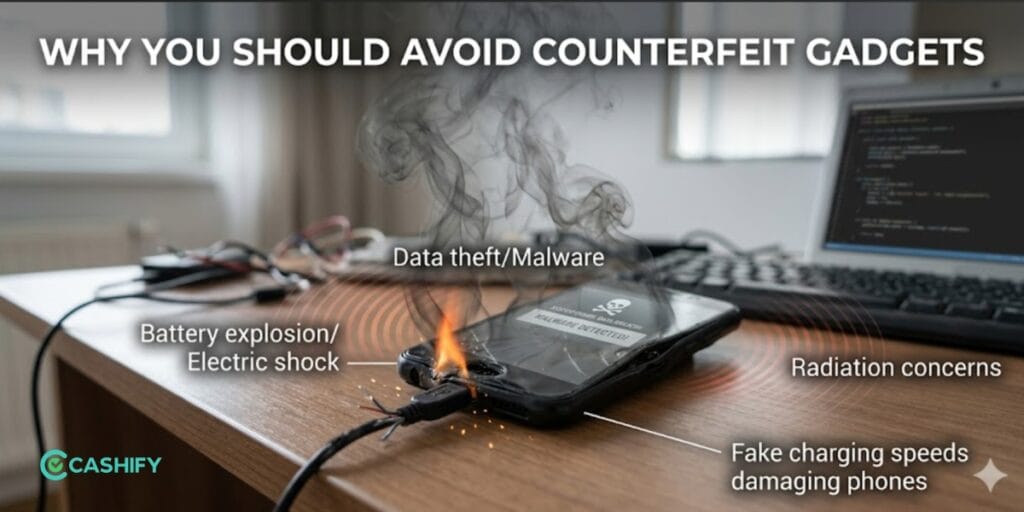
- Battery explosion risks
- Electric shocks
- Data theft
- Malware
- Radiation concerns
- Fake charging speeds are damaging phones
I will share one more personal experience about the power bank that my friend brought from the train platform. When I opened it, I found solid mud inside it to increase the weight. two small batteries and an LED. It had a small display, showing the battery percentage inside the power bank. So, it can severely damage your device’s battery; it was packed without any precautions, and it might explode in future.
I would strongly suggest avoiding buying any gadgets from roadside sellers, train platforms, bus stations, or random vendors who approach you with unbelievably low prices. Most of these sellers attract customers with low prices and “original product” claims to quickly sell counterfeit gadgets.
Just imagine, how is it realistically possible for someone to sell you “original” AirPods Pro at such a low price? If you use a little common sense and basic market awareness, you will immediately understand that such deals are almost impossible. Similarly, no brand-new iPhone can genuinely be available for 15,000 rupees or less.
So, always avoid making impulsive purchases and use complete caution before buying any gadget, especially from unofficial sellers or suspicious markets.
Also Read: Inside India’s Largest Smartphone Refurbishment Warehouse: How Old Phones Become ‘Like New’ Again
How To Identify Counterfeit Gadgets
It’s very important to verify before buying any mobile phone, smartwatch, earbud, neckband, etc.
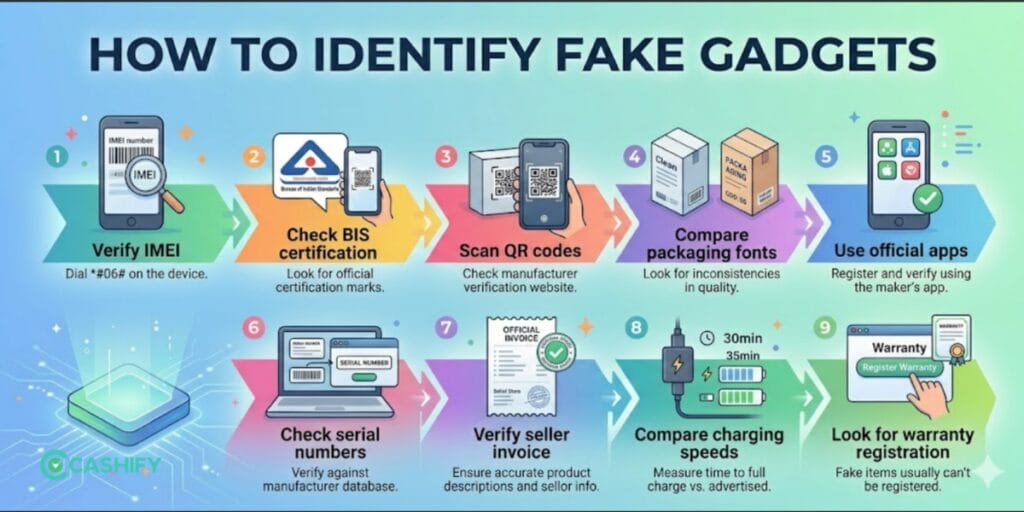
- Verify IMEI
- Check BIS certification
- Scan QR codes
- Compare packaging fonts
- Use official apps
- Check serial numbers
- Verify seller invoice
- Compare charging speeds
- Look for warranty registration
Also Read: Original Screen Vs Fake Screen: What You Need to Know?
Final Words
Delhi’s counterfeit gadget economy continues to grow because it sits at the intersection of aspiration and affordability. As long as premium devices remain expensive, counterfeit gadgets will remain easily accessible through local markets and online platforms.
The ecosystem will keep evolving faster than enforcement can keep up. Stronger awareness, stricter regulation, and smarter buying decisions are the only ways to reduce the spread of fake tech products.
Are you still browsing through your broken screen? Don’t worry! Book an at-home mobile phone screen repair with Cashify—an affordable and one-stop destination for all your mobile phone needs. In case you break your screen within 1 month of repair, we will replace your screen again—for FREE.