

A smartphone battery recycling is anything but simple. It is tiny, sealed inside the phone, held down with strong adhesives, and packed with different materials. It can become a fire hazard if damaged.
And that’s only the technical side. In India, many old batteries never reach authorised recyclers in the first place. Some stay forgotten in drawers, while others enter informal scrap channels where valuable materials can be lost and safety risks increase.
So, what exactly makes smartphone batteries so difficult to recycle? Let’s break it down.
Also read: How Companies Like Cashify Make E-Waste Recycling Convenient And Rewarding?
Why Are Smartphone Batteries Difficult To Remove?
The first challenge begins before recycling can even start. It is getting the battery out of the phone.
Modern smartphones are designed to be slim and compact. To achieve this, manufacturers often use strong adhesives, sealed backs, tightly packed components, and non-removable pouch batteries. This makes the phone look sleek, but it also makes battery removal more complicated.
In many cases, a battery cannot simply be pulled out. The phone needs to be carefully opened. The battery is disconnected, and the adhesive is loosened without puncturing or damaging the cell.
That last part is important. A damaged lithium-ion battery can overheat, catch fire, or enter a condition known as thermal runaway. It’s a condition where the battery rapidly generates more heat and can cause a serious fire.
So, even before material recovery begins, recyclers need trained workers, safe tools, and proper procedures. This adds time and cost to the process.
Smartphone Batteries Are Not All Made The Same
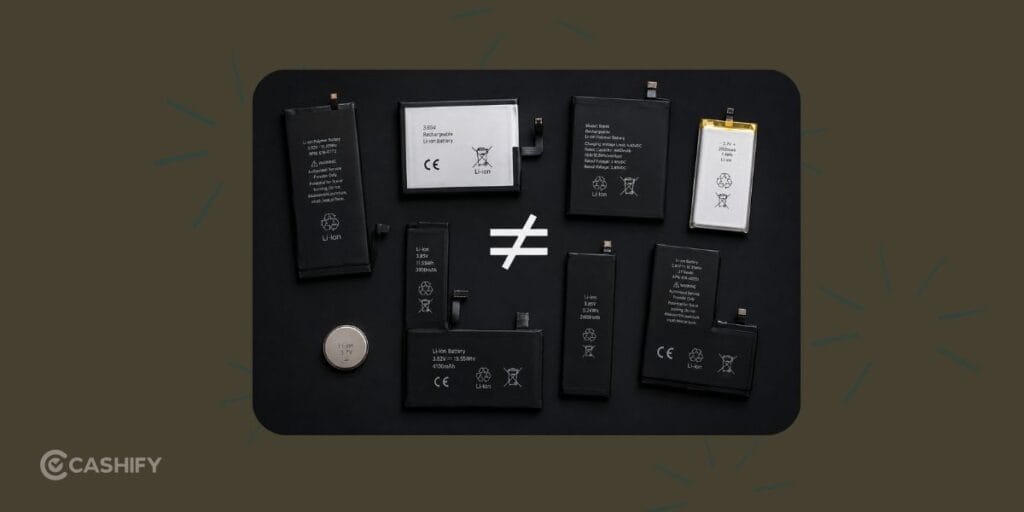
Another major issue is the lack of complete standardisation.
Different smartphone batteries can use different chemical compositions, sizes, shapes, and designs. Lithium cobalt oxide, or LCO, chemistry has traditionally been common in portable electronics. While other lithium-ion chemistries are also used across consumer devices.
This matters because recyclers cannot always use one identical process for every battery.
Different battery chemistries contain different combinations and amounts of valuable materials such as lithium, cobalt, nickel, manganese, copper, and aluminium. A recycling process that works efficiently for one battery type may not be ideal for another.
Imagine trying to recycle several products without knowing exactly what materials are inside each one. That is one of the practical challenges recyclers face with mixed battery waste.
Better battery labelling and chemistry identification could make this process much easier. But that system is still not consistently available across the entire waste stream.
Also read: How to Identify Certified E-Waste Recyclers Near You?
Safety Risks Make Battery Recycling More Complicated
A dead smartphone battery is not necessarily harmless.
Even an old or damaged lithium-ion battery can retain some energy. If it is crushed, punctured, overheated, or handled incorrectly, it can short-circuit and create a fire risk.
This is why proper battery recycling involves several safety steps. It includes safe collection, storage, transport, discharge, dismantling, and processing.
In India, this challenge becomes more serious when batteries enter the informal recycling sector. Informal handlers may not always have access to proper discharge systems, fire suppression equipment, protective gear, or controlled processing facilities.
Unsafe dismantling or burning can also release toxic substances and contaminate the surrounding environment.
For me, this is one of the biggest reasons smartphone battery recycling cannot be treated like ordinary scrap collection. These batteries may be small, but the safety risks are very real.
Collecting Old Smartphone Batteries Is A Major Problem
Before a battery can be recycled, it has to be collected. And this is where the system often breaks down.
Many people keep old smartphones at home for years. Some are stored as backup devices. Others are forgotten in drawers. Some eventually enter mixed scrap streams, where the battery may not reach an authorised recycler.
Studies and industry assessments have also pointed to a significant collection gap in smartphone battery recycling. A large share of end-of-life consumer electronics batteries are not entering proper collection channels at all.
This is a serious issue because India cannot recycle batteries that never reach a recycling facility in the first place.
According to recent estimates, India had around 19 kilotonnes of end-of-life lithium-ion batteries available in 2023. This volume could rise sharply to around 233 kilotonnes by 2035. Consumer electronics such as smartphones, laptops, and tablets are expected to remain a major part of the early battery waste stream.
The battery recycling problem is growing quickly, but collection systems are still catching up.
Also read: Smart E-waste Disposal: Why Your Old Gadget Deserves a Greener Goodbye!
Informal Recycling Creates Another Layer Of Difficulty!
India has a large informal e-waste ecosystem, and it plays a major role in collecting discarded smartphones and batteries. This network is often good at reaching households and collecting old devices. However, the real challenge begins after collection.
For effective smartphone battery recycling, old batteries need to reach authorised facilities that can safely dismantle and process them.
When they are handled using unscientific methods, several problems can arise:
- Lower material recovery: Valuable materials may not be recovered efficiently and can be lost during processing.
- Environmental damage: Hazardous substances can contaminate the soil, water, and air.
- Safety risks: Improper handling of lithium-ion batteries can increase the risk of fires and harmful exposure for workers.
- Loss of valuable resources: Batteries may be processed into black mass, but turning it into high-purity, battery-grade materials requires advanced technology.
India is expanding its formal lithium-ion battery recycling capacity. But these facilities still face collection shortages. There’s uneven regional coverage, and competition from informal channels.
So, the problem isn’t simply a lack of recycling capacity. For smartphone battery recycling to work properly, old batteries must actually reach the right facilities in the first place.
Also read: How Proper E-Waste Recycling Can Help Combat Climate Change!
Recovering Materials Is More Complex Than It Sounds!
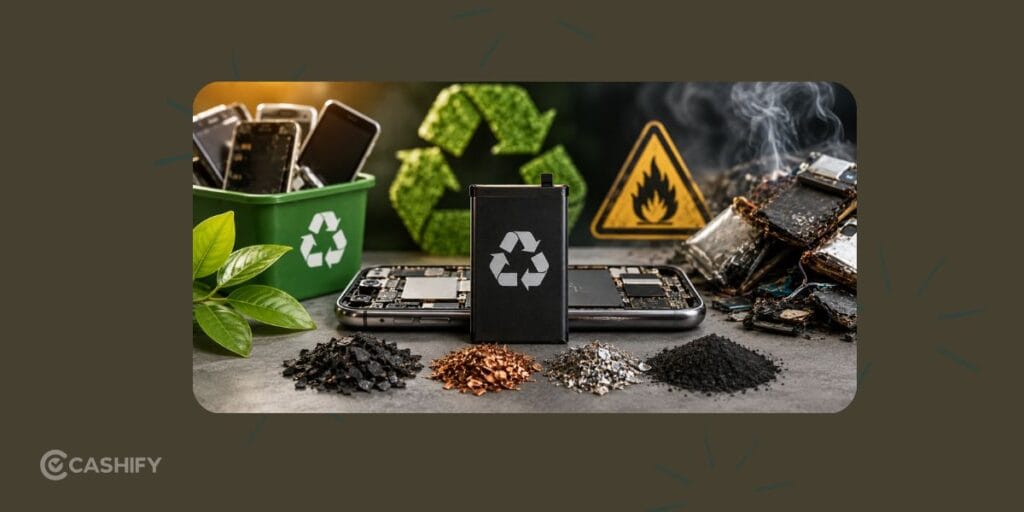
A smartphone battery contains materials that can potentially be recovered and reused. That sounds simple on paper. In reality, separating these materials efficiently is technically demanding.
The battery first needs to be safely dismantled and processed. Recyclers then need to separate and recover different materials at useful purity levels.
There are several recycling approaches. Mechanical processing can help break down and separate battery components. Hydrometallurgical processes use chemical methods to recover valuable metals. Hydrometallurgy is generally preferred when the goal is high material recovery. Though it requires specialised infrastructure and careful chemical handling.
Direct recycling is another emerging approach that aims to preserve more of the battery’s active materials. However, it is still harder to scale because it requires better sorting and a clearer understanding of the battery chemistry and condition.
The key challenge is not simply recovering some material. The bigger goal is recovering materials at a quality high enough to be used again in the battery supply chain.
That is much harder.
The Economics of Recycling Don’t Always Work
One of the less obvious problems with smartphone battery recycling is simple economics.
Recycling lithium-ion batteries requires expensive equipment, trained workers, safety systems, chemical processing, and transportation. Transporting hazardous batteries alone can add significantly to overall costs.
Meanwhile, the value of recovered materials depends heavily on the battery chemistry and market prices.
A battery with higher concentrations of valuable metals may be more attractive to recycle than one containing lower-value materials. This means recyclers cannot treat every battery equally from an economic point of view.
India also faces a capacity mismatch in some parts of the industry. Recycling plants are being built and expanded in anticipation of future battery waste. The current supply of formally collected end-of-life batteries may not be enough to keep all facilities fully utilised.
So, the problem is not simply a lack of recycling plants. It is also about building a reliable pipeline that moves batteries from consumers to authorised recyclers.
Also read: How Cashify Is Turning India’s E-Waste Management Into a Sustainability Movement?
India’s Dependence on Imported Critical Minerals Raises the Stakes
India remains heavily dependent on imports for important battery materials. This includes lithium, cobalt, and nickel.
This makes efficient battery recycling more than just an environmental issue. It is also a resource security issue.
Every discarded smartphone battery contains a small amount of material that could potentially be recovered and brought back into the supply chain. When millions of batteries are involved, those small amounts start to add up.
The Problem?
But inefficient recycling can cause these resources to leak out of the system. Valuable materials may be lost during informal processing. Or, they leave the country as lower-value intermediate materials. Instead of being refined domestically into high-purity battery-grade products.
Better recycling could reduce some dependence on imported critical minerals while supporting a more circular battery economy.
In simple terms, throwing away recoverable battery materials means India may end up importing more of the same resources later.
Are India’s Battery Recycling Rules Strong Enough?
India introduced the Battery Waste Management Rules, 2022 to improve battery collection and recycling. These rules follow the Extended Producer Responsibility (EPR) model.
Under EPR, battery producers are responsible for collecting and recycling a certain amount of battery waste. The targets increase over time and vary by battery category.
This is a good step, but there are still problems with implementation.
Some of the main issues include:
- Weak monitoring of recycling activities
- Fake or questionable recycling certificates
- Complex compliance requirements
- Uneven enforcement of the rules
- Limited support for recycling different battery chemistries
There is another problem too: smartphone design.
Many smartphones are not built with easy battery removal in mind. Strong adhesives and sealed designs make batteries harder to remove safely.
A phone with an easily replaceable battery is simpler to repair and recycle. On the other hand, a tightly sealed phone creates more work when it reaches the end of its life.
That is why design for repair and design for recycling should become a bigger priority.
Also read: How You Can Help The Environment By Selling Your Old Phone On Cashify
What Can Make Smartphone Battery Recycling Easier?
The good news is that the problem is difficult, not impossible.
A few changes could make a major difference:
1. Better Battery Collection
People need easy access to authorised collection points. Take-back programmes, doorstep collection, retail drop-off points, and better consumer awareness can help old batteries reach formal recyclers.
2. Easier-to-Repair Phone Designs
Manufacturers can reduce the use of excessive adhesives and design phones that allow safer battery removal. Better labelling can also help recyclers identify battery chemistry and process it correctly.
3. Stronger Formal Recycling
India needs more than recycling capacity on paper. Facilities need a steady supply of batteries, better technology, and systems capable of producing high-purity materials for reuse.
4. Better Integration of the Informal Sector
The informal sector already has strong collection networks. Instead of ignoring this reality, policymakers can focus on safer integration, training, and formal partnerships that move collected batteries into authorised recycling channels.
5. Stronger EPR Enforcement
Tracking batteries from sale to end-of-life can make it harder for waste to disappear into unregulated channels. Better traceability and stricter checks on recycling certificates could also improve trust in the system.
Also read: How Cashify Complies With E-Waste Management Rules
Take Away: Smartphone Battery Recycling Is Hard,But India Cannot Ignore It
Smartphone batteries are difficult to recycle. It is because the challenge starts long before the recycling plant. Phones are hard to open, batteries are difficult to handle safely, and chemistries vary. Collection systems are also weak, and high-quality material recovery costs money.
In India, these technical problems are made worse by the dominance of informal processing, limited formal collection, uneven capacity utilisation, and enforcement gaps.
My view is simple. India does not just need more battery recycling plants. It needs a better battery recycling ecosystem.
The batteries inside old smartphones may be small, but the resources locked inside them are too valuable to waste. As millions more devices reach the end of their lives, recycling them properly will move from being a good environmental practice to an essential part of India’s resource and technology strategy.
The decisive verdict: smartphone batteries are hard to recycle, but leaving them unrecycled is far more expensive in the long run.
If you’ve just bought a new phone and don’t know what to do with your old phone, then here’s your answer. Sell old mobile to Cashify and get the best price for it. If you are planning to buy a new phone, check out Cashify’s refurbished mobile phones. You can get your favourite phone at almost half price with six-month warranty, 15 days refund and free delivery.