

Looking to buy a new professional camera or a lens for yourself but do not know which way to go? Well, someone would suggest you to choose prime lens and go for the optics choice, while some would tell you to prefer zoom lens and do that proper ‘shot from 300 meters away’ posts. To make the choice hustle easier for you, we have brought you an interesting Prime Lens vs Zoom Lens debate inside this article. We figure out the difference between these two lens types and also explore more about camera lenses. So, let us begin the draft right here.
Also Read: Best Camera Lens For Portrait Photography: Guide For Beginners
Different Types of Camera Lenses and Their Uses: Know Before You Delve Into The Prime Lens vs Zoom Lens Faceoff
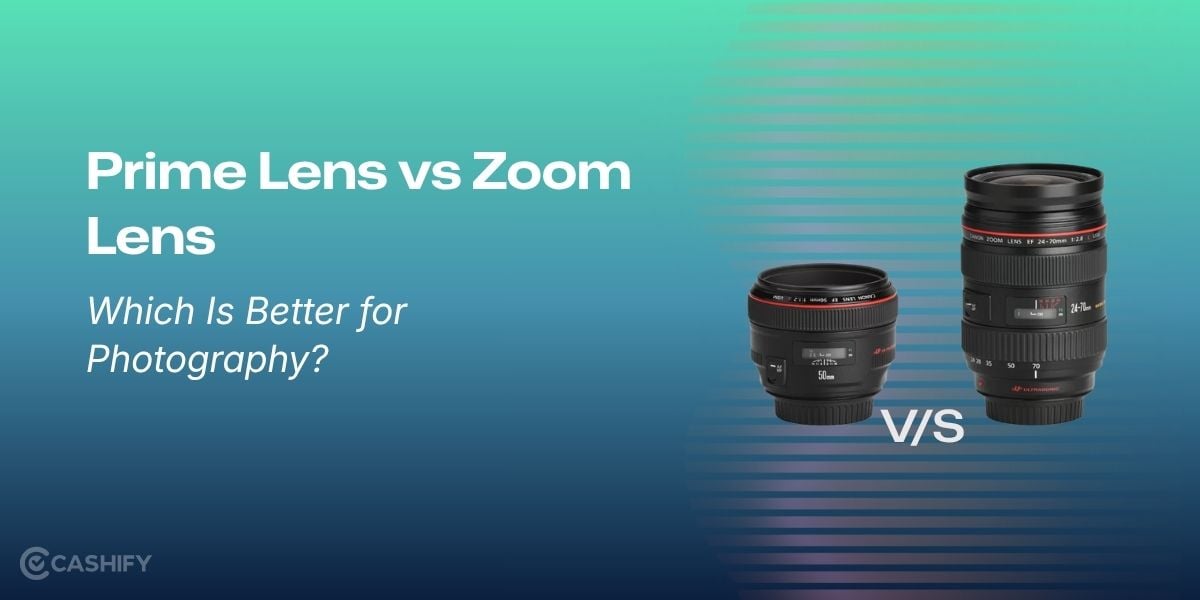
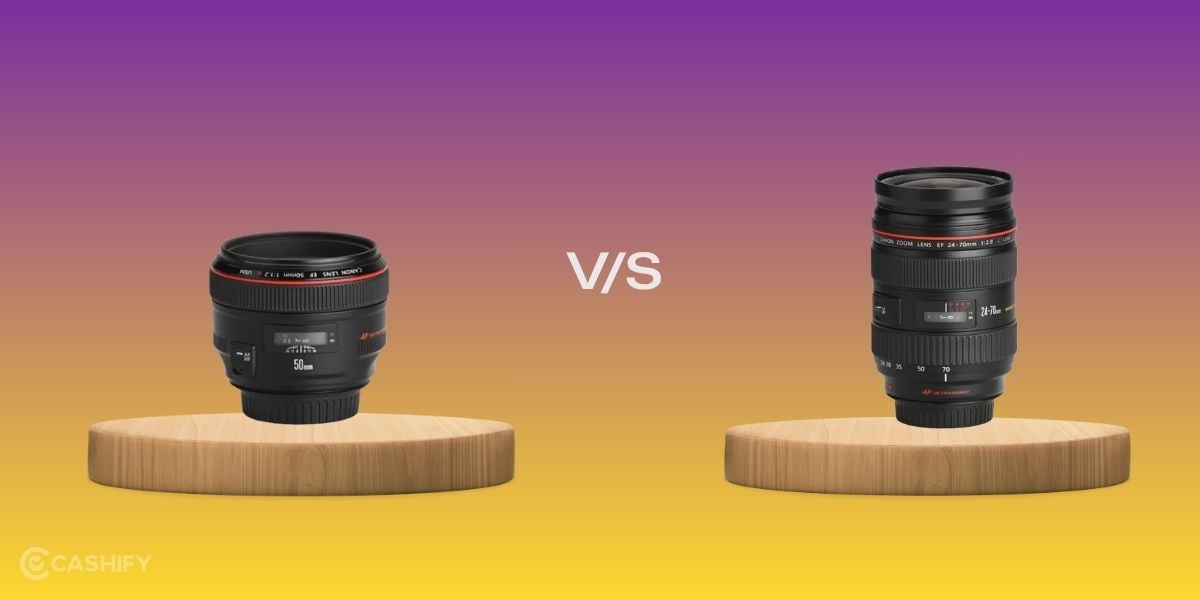
Before we move into this Prime Lens vs Zoom Lens debate, it is important to figure out what does a camera lens mean for you in its core specification. Suppose someone says you he/she wants a Fisheye lens, does it come under the prime lens category or a zoom lens category? Well, Prime lens basically means lenses that have fixed focal lengths. Zoom lenses on the other end have variable focal lengths.
But there’s a lot more to the core difference between Prime Lens vs Zoom Lens. So, let us first walk you through to the different types of lenses in a camera.
Camera lenses play a crucial role in determining how a photograph looks, from its field of view to its depth of field and level of detail. Different lenses serve different photography needs.
The first kind of lenses are Wide-angle lenses. Wide-angle lenses capture a broad scene, making them ideal for landscapes, architecture, and group photographs.
Standard lenses, such as 50mm lenses, are the next. These lenses offer a natural perspective for everyday photography.
Third is the Telephoto lens. Telephoto lenses bring distant subjects closer and are commonly used for wildlife, sports, and portraits.
Opposite to the Telephoto lenses, there are Macro lenses, the fourth type. Macro lenses capture fine details of small objects, including insects and flowers.
Then come Fisheye lenses. These lenses produce an extremely wide, distorted perspective for creative shots, while tilt-shift lenses help control perspective in architectural photography. Another important category is portrait lenses, which help photographers capture people with flattering proportions and attractive background blur.
Lenses can also be classified as prime or zoom lenses based on their focal length. Prime lenses have a fixed focal length, whereas zoom lenses cover a range of focal lengths. Understanding their differences helps photographers choose suitable equipment based on their shooting style, lighting conditions, flexibility requirements, and budget.
Prime Lens vs Zoom Lens
Feature | Prime Lens | Zoom Lens |
Focal length | Fixed, e.g., 50mm | Variable, e.g., 24–70mm |
Framing | Requires repositioning | Adjusts without moving |
Aperture | Often wider | Depends on model |
Low-light use | Often advantageous | Varies by aperture |
Portability | Often compact | Can be heavier |
Versatility | Specialised framing | Multiple focal lengths |
Cost | Varies by model | Varies by model |
Best for | Portraits, street photography | Travel, events, wildlife |
Also Read: How To Take Better Photos: Best Camera Settings And Gear
Prime Lens vs Zoom Lens Verdict: Which Suits You Better?
Now, coming to the verdict of this Prime Lens vs Zoom Lens debate. To help you out which lens is better for you, we have prepared 5-5 buying guides each for both lenses. So, come, let’s have a look at these verdicts.
Prime lenses: Best for simplicity and image quality
- Film Shoots and Cinematic Looks: Prime lenses are a good choice for planned film shoots where you can control the camera position. Their wider apertures can create a soft, blurred background for a cinematic look.
- Street Photography: If you enjoy capturing everyday life, prime lenses are a practical option in this Prime Lens vs Zoom Lens debate. Their compact size makes them easy to carry around Indian markets, busy streets and local neighbourhoods.
- Family Photos and Everyday Use: Prime lenses are suitable for family gatherings, birthdays and casual photos. A 35mm or 50mm lens is a good starting point for capturing natural-looking moments.
- Travel and Basic Photography: If you want a lightweight camera setup for holidays and weekend trips, a prime lens is worth considering. It encourages you to explore different angles without carrying bulky equipment.
- Beginners on a Budget: A prime lens can be a sensible first purchase for beginners who want to learn photography. If you’re a beginner, prime lens is the choice for you in this Prime Lens vs Zoom Lens battle. An affordable 50mm lens can offer good image quality without requiring an expensive zoom lens.
Zoom lenses: Best for flexibility and professional work
- Wildlife Photography: Zoom lenses are useful for photographing birds and animals from a distance. You can adjust the focal length to frame your subject without moving closer and disturbing wildlife.
- Professional Photography: If you shoot weddings, events or paid assignments, a zoom lens offers flexibility in changing situations. One lens can cover multiple focal lengths, reducing the need to change lenses frequently.
- Reels and Video Shooting: Zoom lenses help when recording travel videos, product demonstrations and social media reels. You can adjust framing without changing lenses, although smooth zooming during recording depends on the lens. So, if you’re a reel shooter or a vlogger going to mountain trips, choose zoom lenses in this Prime Lens vs Zoom Lens debate.
- Sports and Distant Subjects: For cricket matches, school sports and outdoor events, a telephoto zoom lens helps capture action from a distance. It lets you follow moving subjects and adjust your composition quickly.
- Long-Term Versatility: If you plan to explore different photography styles over time, a zoom lens can be a practical investment. It covers multiple focal lengths, making it useful for travel, portraits and events.
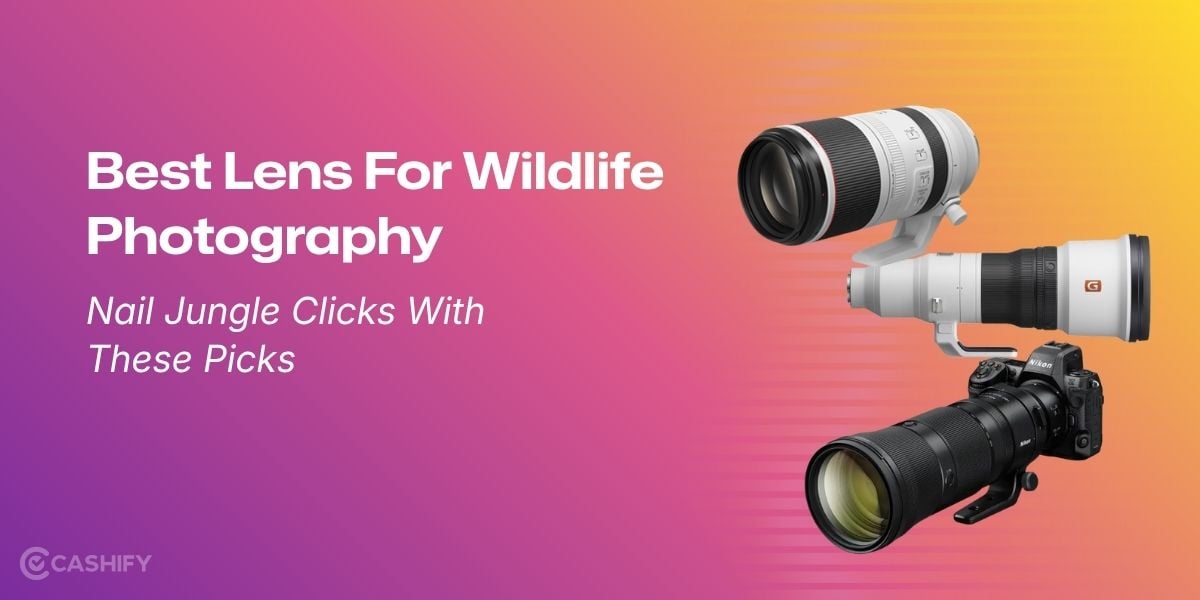
Also Read: Best Lens For Wildlife Photography: Nail Jungle Clicks With These Picks
Choose Cashify For The Best Lenses

Made your choice in this Prime lens vs Zoom lens debate and now want to buy a new lens? Well, Cashify is here to help you!
Cashify offers a wide range of refurbished camera lenses at biggest discounted rates! With Canon lenses starting at around Rs. 6000, you can get the perfect zooming fit for your camera, all thanks to Cashify! So, worry not, grab your favourite lens from Cashify asap!
End Note
That’s it from this guide on Prime Lens vs Zoom Lens. Both lenses have amazing aperture and capturing quality, all you need to sort is your preference and main motive of using your camera. If you have heavy-loaded stuff to do with your cameras and a more dynamic way to go for shooting, choose zooming lenses. If you have fixed priorities, then go for prime lenses. Keep coming for more such guides!
Are you still browsing through your broken screen? Don’t worry! Book at-home mobile phone screen repair with Cashify—an affordable and one-stop destination for all your mobile phone needs. In case you break your screen within 1 month of repair, we will replace your screen again—for FREE.