

Every phone maker, sleep app, and wellness influencer swears by dark mode. The pitch is simple: bright screens emit blue light, blue light suppresses melatonin, and melatonin controls sleep. Therefore, switch to dark mode before bed and sleep better. It sounds airtight. But is the real-world effect actually measurable on your own body, on a random night, in a typical bedroom? Does Night Mode actually help you sleep?
I had to try it to believe it. Hence, I did this small experiment to find out. I tested this myself over six consecutive nights. Comparing sleep with Night Mode ON vs OFF, tracking real data using a smartwatch and screen time insights.
I observed every metric that mattered: sleep score, duration, deep sleep, REM sleep, heart rate, and more.
The result? The gap was real, measurable, and more nuanced than a simple “dark mode wins” conclusion.
Also read: Does A Phone On The Work Table Affect Productivity?
How The Experiment Was Designed?
The setup was deliberately simple to keep it replicable. I used my phone throughout the day until before bed under a single controlled condition per phase. It’s either full dark mode (system-level, all apps) or standard light mode. I tracked my sleep nightly with a wearable fitness smartwatch that records sleep stages, heart rate, and computes a holistic sleep score.
Phase A
Dark Mode (Apr 22, 23, 24): Phone display switched to dark mode system-wide. All apps, including social media, reading, and messaging, were used in dark theme. No other lifestyle changes were made.
Phase B
Light Mode (Apr 25, 26, 27): Phone reverted to standard light mode. Same usage habits maintained. No blue-light glasses or other compensatory tools were used.
Important: This is an N=1 personal experiment. The findings are personal, real, and data-backed. However, it should not be interpreted as clinical evidence.
Also read: Love At Second Chances! Story Of A Refurbished Phone!
All Six Nights, Real Observation: Sleep Was Driven by Routine, Not Screen Mode
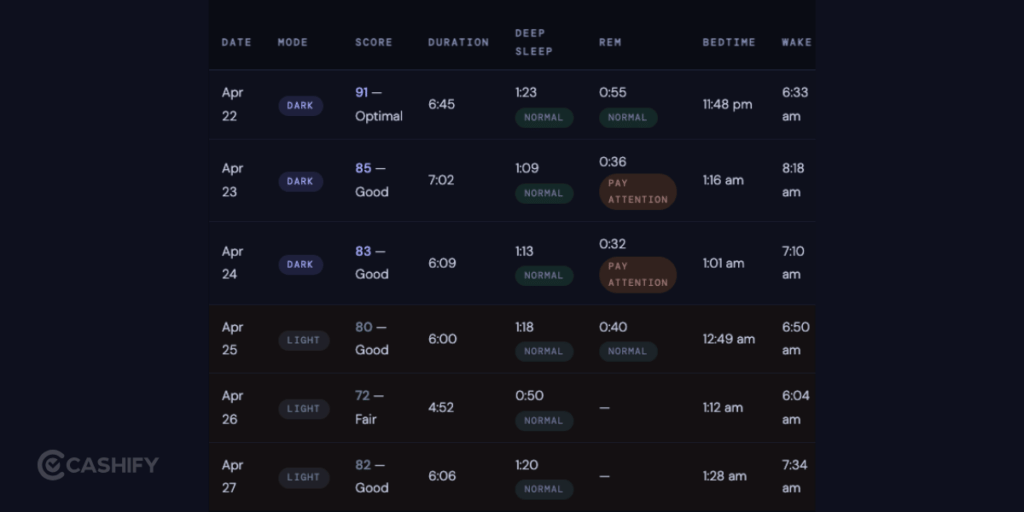
Below is every data point captured across the experiment period. Sleep score is the wearable’s composite quality rating (0–100). Duration, deep sleep, and REM are in hours: minutes.
The Opening Night Effect
The most striking single data point in the entire experiment is April 22nd: a sleep score of 91 (Optimal)
The only “Optimal” rating across all six nights. This was the first night of dark mode, and the body seemed to have responded immediately. Deep sleep clocked in at 1:23 and REM at a healthy 0:55 (Normal), the best REM reading of the entire experiment. Just to note, I usually use the Dark mode. So, the dark mode effect could have been from much earlier than the particular day. The bedtime was also the earliest of the study: 11:48 pm, nearly an hour earlier than the light mode phase average.
Key insight: Earlier bedtime on dark mode nights wasn’t coincidental. Reduced screen brightness and warmer colour temperature likely supported the natural onset of melatonin.
No wonder I slept well.
The REM Sleep Problem
One thing that stood out to me while tracking my sleep was the REM sleep pattern. REM sleep is important because this is when memory consolidation, emotional processing, and overall cognitive recovery happen. During the dark mode phase, I noticed something interesting. On Night 1 (April 22), my tracker showed a Normal REM reading, which looked promising. But on Nights 2 and 3 (April 23 and 24), the tracker flagged REM sleep as “Pay Attention,” with only 36 minutes and 32 minutes recorded, respectively.
This was a bit surprising because my overall sleep scores on those nights were still relatively decent. Looking back at the data, I think the issue was probably my bedtime getting pushed later. Both of those nights, I went to bed after 1 AM. Since REM sleep tends to be heavier in the early morning hours, sleeping later likely reduced my total sleep opportunity and compressed those REM-rich cycles.
April 26 – The Worst Night
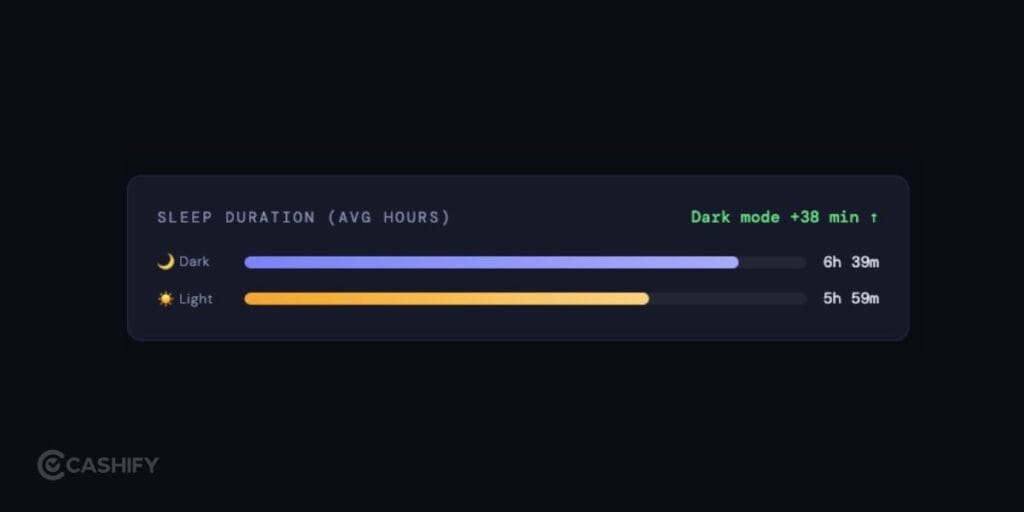
The worst sleep of my entire experiment happened on April 26 during the light mode phase. My sleep score dropped to just 72 (Fair), which was the lowest score I recorded. I only slept for 4 hours and 52 minutes that night. That’s almost 2 hours less than my average during the dark mode days.
The tracker specifically flagged my sleep duration as “Pay Attention,” and my sleep regularity also fell to 69 percent. When I checked the nightly heart rate data, I noticed higher heart rate spikes closer to waking up. This usually points to fragmented or shallow sleep. This one night clearly pulled down my overall light mode average and had a noticeable impact on the final comparison.
Bedtime Drift: The Confounding Variable
While comparing both phases, I realised there was another factor affecting the results that I couldn’t ignore: my bedtime wasn’t consistent.
On my first dark mode night (April 22), I went to bed at 11:48 PM. However, during the light mode nights, my bedtime shifted much later, ranging from 12:49 AM to 1:28 AM. That 60 to 90 minute delay is significant enough to act as a confounding variable in the experiment.
This matters because later bedtimes don’t just shorten sleep duration. They can also interfere with sleep architecture. Going to bed later compresses the early-morning REM-dominant sleep cycles, which are important for proper recovery and are influenced by natural morning light cues. So while screen mode may have played a role, bedtime drift was likely a major contributor to the differences I observed in my results.
Also read: I Tested 3 Ways To Charge Smartphone: The Results Might Change How You Charge Your Phone!
Dark Mode vs. Light Mode: Overall Sleep Duration Numbers Compared
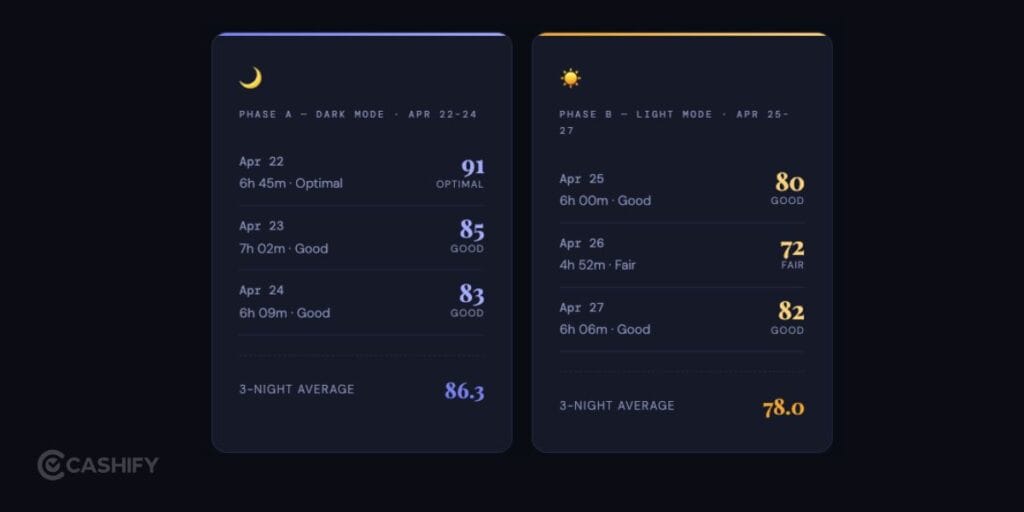
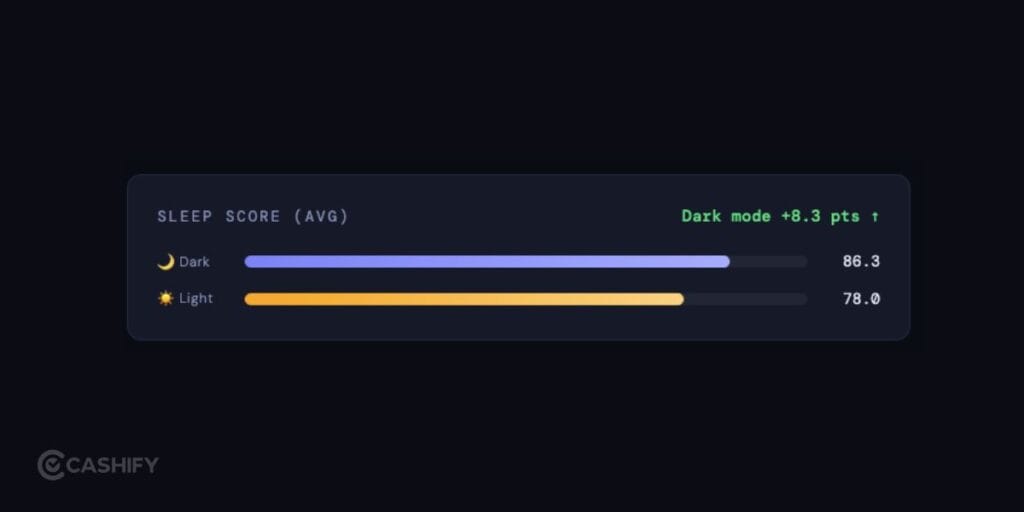
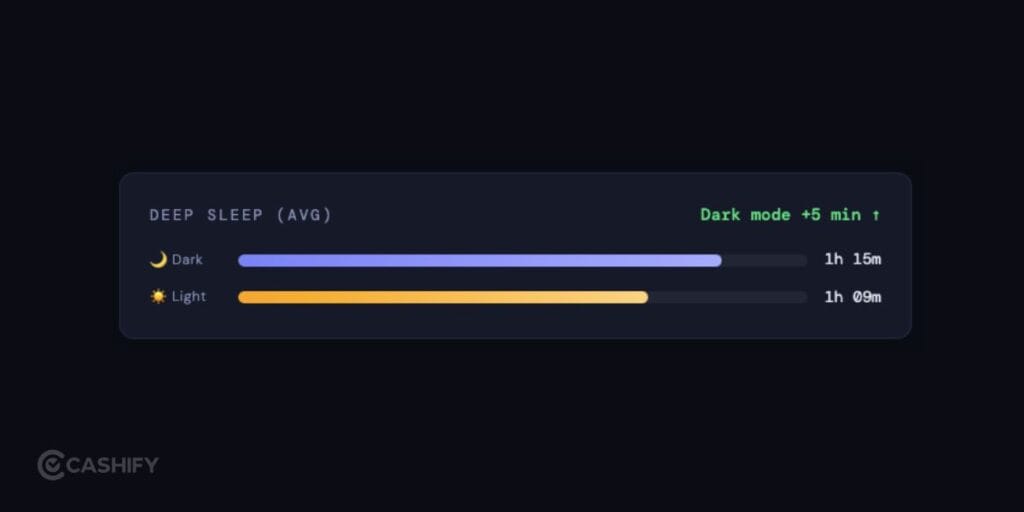
When averaged across each three-night phase, a clear pattern emerges. Dark mode nights outperformed light mode nights on every primary quality metric.
Sleep Score
Sleep Duration
Deep Sleep
Heart Rate: A Subtle Signal
Another interesting pattern I noticed during the experiment was the difference in my resting heart rate across the two phases. When I checked the 7-day heart rate summary, my resting heart rate was consistently lower on the dark mode nights, staying around 69–70 BPM on Wednesday and Thursday, which aligned with the dark mode period.
In comparison, during the light mode phase, my resting heart rate increased and went up to around 76 BPM on Saturday and Sunday. Even though this difference seems small at first, it is actually quite meaningful. A lower sleeping heart rate usually indicates stronger parasympathetic activation. Basically, the body enters a better rest-and-recovery state during sleep.
This made me feel that the dark mode results were not just about getting slightly longer sleep. The lower heart rate data suggests those nights were likely more restorative overall, adding another layer of evidence that dark mode may have positively influenced my sleep quality during this experiment.
Also read: Best Smartwatches Under 3000 In India
6 Important Things I Learned From My Sleep Experiment
1. Dark mode helped me sleep better overall
My average sleep score with dark mode was 86.3, while with light mode it was only 78.0. This means I generally slept better when using dark mode before bed.
2. Dark mode helped me sleep earlier
On the first dark mode night, I fell asleep almost 1 hour earlier than usual. This may be because dark mode reduces blue light, which helps the brain feel sleepy faster.
3. Dark mode is not enough for good REM sleep
Even when I used dark mode, my REM sleep became poor on nights when I slept after 1 AM. So, sleeping on time is just as important as using dark mode.
4. One bad sleep night can change the whole result
On April 26, I only slept for 4 hours 52 minutes and got a low score of 72. This one bad night lowered my overall average during the light mode phase.
5. Sleeping at the same time every day matters most
- My sleep regularity was only 69 percent, which is not very good.
- My bedtime changed from 11:48 PM to 1:28 AM, showing I was not very consistent.
- This taught me that having a fixed sleep schedule is more important than screen mode alone.
6. Deep sleep stayed almost the same
My deep sleep stayed normal in both dark mode and light mode. This means screen mode may affect when I fall asleep, and REM sleep more than deep sleep.
Also Read: 5 Best Smartwatches Under 2500 In India
Does Night Mode Help You Sleep: Hype Or Real?
Real.
But that isn’t the whole story!
There are benefits to using dark mode on a phone before bed. For me, it resulted in higher sleep scores, longer sleep duration, better REM on opening nights, and lower resting heart rates. The experiment also reveals that bedtime consistency is the master variable. No display setting can fully compensate for going to bed 90 minutes later than your body wants to.
In The End
After completing this experiment, I realised that improving sleep is not only about switching to dark mode on the phone. Yes, Night Mode does help you sleep. It improved my sleep scores and helped me fall asleep earlier. However, it worked best only when I also maintained a consistent bedtime.
The best results in my experiment happened on April 22, when I used dark mode and also went to bed earlier than usual. This suggests that the combination of reduced screen brightness + fixed sleep timing is more effective than using just one of these habits alone.
However, if you are only going to do one thing, set a consistent bedtime alarm and keep it. But if you are already consistent, adding dark mode makes sense. It does appear to offer a meaningful, measurable boost to sleep quality. Especially in helping the body relax faster and improving overall sleep scores.
You’re welcome to share your own thoughts about the best sleep habits in the comments section below. I would love to know!
If you’ve just bought a new phone and don’t know what to do with your old phone, then here’s your answer. Sell old mobile to Cashify and get the best price for it. If you are planning to buy a new phone, check out Cashify’s refurbished mobile phones. You can get your favourite phone at almost half price with six-month warranty, 15 days refund and free delivery.