

In recent times, India has become one of the most promising and dynamic players in the telecom market. The Indian telecommunications industry is the fastest-growing, with around 1.21 billion subscribers in 2025. However, with all this impressive growth, have you ever experienced a mobile network issue and wondered: Who do I complain to? The Indian telecom protection system has two powerful bodies, TRAI and DoT. The Indian telecom sector is governed through a dual-institution mode. Both do different jobs, but they work toward the same goal: to provide safe, fair, and reliable communication. If you want to understand who protects your mobile, internet, and digital rights in India, you’ve come to the right place. In this article, we will conduct a TRAI vs DoT head-to-head comparison. Keep reading this article to learn more about the roles and responsibilities of these two governance bodies.
Let’s first start with understanding telecom protection.
What is Telecom Protection?
Telecom protection means keeping communication services secure, affordable, reliable, and fair. It includes user rights, fair pricing, top-notch network quality, data safety, and national security. Telecom protection is a framework that ensures compliance with licensing conditions, efficient spectrum utilisation, quality of service enforcement, network and national security assistance, and consumer interest safeguards. This framework is implemented via regulations and administrations.
Also read:
Sanchar Saathi Myths Busted: What It Can and Can’t Do
Indian Telecom Industry Framework: Quick Overview
The Indian telecom industry framework mainly includes Indian Government Bodies and Independent Bodies.
Let’s understand both in brief.
What are Indian Government Bodies?
Indian government bodies formulate policies and pass laws to regulate the Indian telecom industry. It includes:
WPC
WPC stands for Wireless Planning and Coordination. It handles the allocation and management of spectrum.
DoT
The full form of DoT is Department of Telecommunications. It handles license and frequency management for telecom.
Telecom Commission
It is an exclusive policymaking body of DoT.
Also read: How to Use Sanchar Saathi TAFCOP
What are Independent Bodies?
Independent bodies take care of various research activities and track the quality of service provided in the Indian telecom industry. These bodies also provide various recommendations to improve the status of telecom operations in India.
TRAI
TRAI stands for Telecom Regulatory Authority of India. It is an independent regulatory body.
TDSAT
The full form of TDSAT is Telecom Disputes Settlement and Appellate Tribunal. It is a telecom dispute settlement body.
Let’s compare TRAI and DoT to understand more about these governance bodies.
What is TRAI?
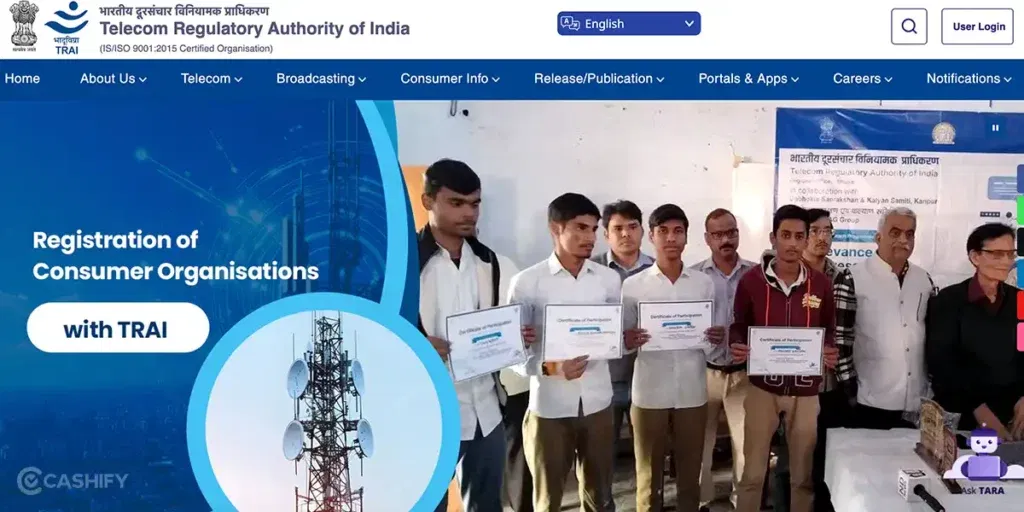
TRAI was created under the Telecom Regulatory Authority of India Act, 1997. It is an independent regulator. TRAI does not run any telecom company, give licenses, or own networks. Instead of it, TRAI decides how telecom companies should behave.
Core Functions of TRAI
TRAI is responsible for:
| Area | What TRAI Does |
| Pricing | It sets guidelines for tariffs and plans. |
| Service Quality | TRAI defines standards for calls, data, and coverage |
| Consumer Rights | It protects users from unfair practices. |
| Spam Control | TRAI regulates telemarketers and promotional messages. |
| Transparency | It ensures clear billing and plan details. |
| Policy Advice | TRAI advises the government on telecom matters. |
In short, TRAI is responsible for protecting telecom users.
Let’s understand how TRAI does it.
Also read: How to Check Mobile Connections In Your Name With Sanchar Saathi
How TRAI Protects Daily Users?
TRAI offers user-level protection for various issues users face. Here is how TRAI helps.
| Issues Faced by Users | How TRAI Helps |
| Expensive or Confusing Plans | TRAI sets pricing rules and transparency norms. |
| Spam calls and SMS | Introduced DND and spam regulations |
| Dropped calls | It defines quality benchmarks. |
| Hidden charges | Mandates clear billing |
| Misleading ads | It issues compliance guidelines. |
It means TRAI plays an important role in telecom protection through:
- Tariff and market regulation
- Quality of service enforcement
- Consumer data and communication protection
- Regulatory advisory role
What is DoT?
DoT holds the administrative authority. It operates under the Ministry of Communications, Government of India. DoT does not have direct executive authority. The main responsibilities of DoT are as follows.
Core Functions of DoT
DoT is responsible for:
| Area | Administrative Responsibility |
| Licensing | It handles the issue and renewal of telecom licenses. |
| Policy | DoT frames policy and implements government decisions. |
| Spectrum | It allocates, auctions, and manages government spectrum. |
| Infrastructure | DoT handles network deployment oversight. |
| Security | It carries lawful interception and monitoring. |
| PSU Oversight | DoT does the supervision of MTNL and BSNL. |
In short, DoT protects the country’s telecom backbone.
How does DoT Protect Telecom?
DoT offers national-level protection against different scenarios. Let’s understand it in brief.
| Scenario | How DoT Helps |
| Cyber threats | It secures telecom networks. |
| Foreign risks | DoT regulates vendors and equipment. |
| Emergencies | It keeps the network running during disasters. |
| Rule violations | DoT penalises and suspends operators. |
| Long-term planning | It plays a major role in shaping India’s telecom future. |
It clearly shows that DoT offers protection beyond daily user problems.
Also read: How To Report Fraudulent Mobile Connections With Sanchar Saathi?
TRAI vs DoT: Quick Technical Comparison
Let’s do a quick technical comparison of TRAI vs DoT.
| Parameter | TRAI | DoT |
| Legal Status | Independent regulator | Government department |
| Nature of Power | Regulatory and advisory | Executive and administrative |
| Focus Area | Economic regulation | Policy and infrastructure |
| Tariff Control | Yes | No |
| Licensing Authority | No | Yes |
| Spectrum Allocation | No | Yes |
| National Security | No | Yes |
| Enforcement | Indirect | Direct |
TRAI vs DoT: Functional Comparison
Here is a quick functional comparison of TRAI and DoT.
| Function | TRAI | DoT |
| Consumer Protection | Yes | No |
| License Enforcement | No | Yes |
| Spectrum Auctions | No | Yes |
| Telecom Security | No | Yes |
| Policy Implementation | No | Yes |
| Market Regulation | Yes | No |
Let’s Understand Decision-Making and Enforcement Hierarchy
TRAI holds independent regulatory powers under statutes. It generally issues rules and enforces them against operators. Their orders can be challenged in TDSAT and in courts. DoT retains its sovereign policymaking power. The government can accept, modify, or reject TRAI’s recommendations. When it comes to licensing, spectrum auction/assignment, and national security decisions made by the DoT are generally final. Whenever conflicts occur, DoT’s policy or administrative directives usually override TRAI recommendations.
For example,
DoT designs and executes auctions, and TRAI suggests reserve prices and spectrum policy. However, they cannot conduct auctions. Usually, DoT’s decisions are final. DoT issues licenses and can change license terms. However, TRAI can recommend changes and handle service-level obligations.
In short, if you’re thinking about who is more powerful, then it completely depends on the subject matter. DoT has the superior power regarding policy, licensing, and spectrum authority. TRAI is an independent regulatory body that controls service quality, tariff, and consumer protection, and more.
Also read: Is Sanchar Saathi App Mandatory By The Govt?Know The Hidden Truth
TRAI vs DoT: Complaint and Enforcement Flow
Here is the complaint and enforcement flow.
| Issue Type | Regulatory Layer |
| Tariff disputes | TRAI framework |
| Quality of service violations | TRAI benchmarks |
| License breach | DoT enforcement |
| Security incidents | DoT |
| Policy amendments | DoT |
It clearly means TRAI defines standards, and DoT enforces authority.
Why does India Need Both TRAI and DoT?
TRAI and DoT both balance each other. Here are a few things that you will experience without TRAI and DoT.
If TRAI is not there, telecom companies could overcharge, users would lose protection, and quality standards would drop. Without DoT, networks would lack control, security risks would rise, and infrastructure would suffer. Therefore, India needs both TRAI and DoT.
Also read: Why Every Smartphone User Should Register On Sanchar Saathi?
Let’s Sum Up
TRAI and DoT are not rivals, but they are partners with different responsibilities. TRAI protects users, regulates pricing and service quality, and controls spam and transparency. On the other side, DoT controls telecom infrastructure, issues licenses, and protects national interests. When they work together, they keep India connected safely and fairly. Hopefully, the above discussion helped you understand the role of TRAI and DoT. Still, if you have any queries, write to us in the comment section below.
It’s time to upgrade to a better phone. Sell old mobile phone and buy refurbished mobile phone from top brands like Apple, OnePlus, Samsung, Xiaomi and more at almost half price. Buy smart, buy refurbished.