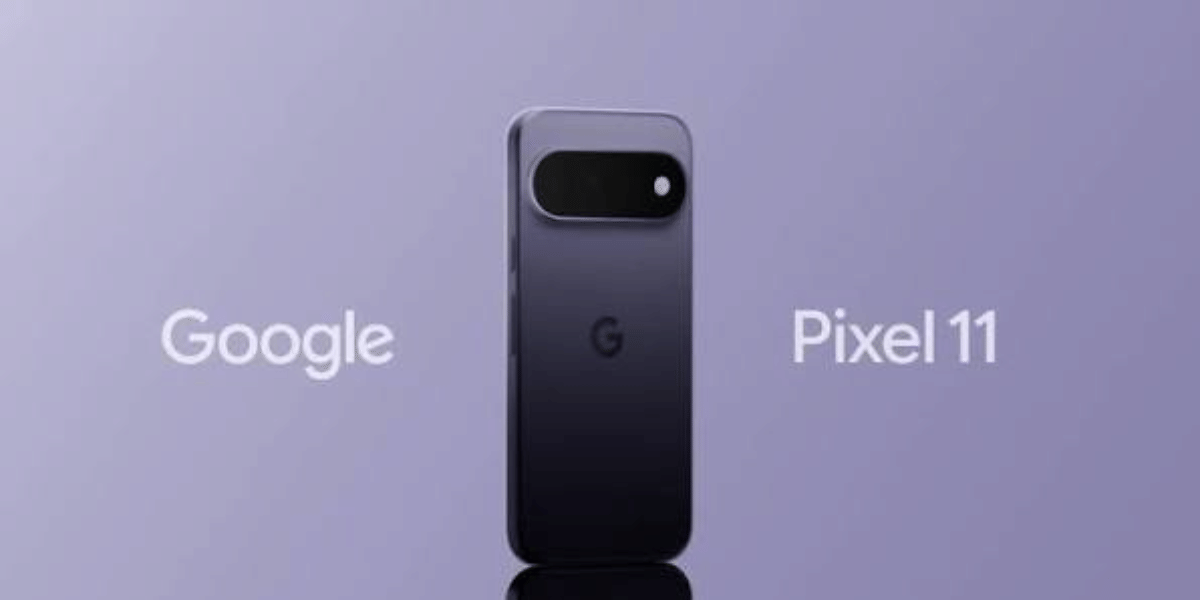


The Google Pixel 11 Pro vs Samsung Galaxy S26 Ultra comparison is one of the most interesting Android flagship battles of 2026. Google’s latest Pro model focuses on clean software, AI, computational photography and a more compact design. While Samsung’s Ultra remains a feature-packed powerhouse built around performance, zoom, productivity and a huge display.
The Pixel 11 Pro was announced on August 12, 2026, while the Galaxy S26 Ultra launched earlier in March 2026. Both are premium flagship phones with long software support, but they take very different approaches.
So, which one should you buy? Let’s compare them across design, display, performance, cameras, battery, software and features.
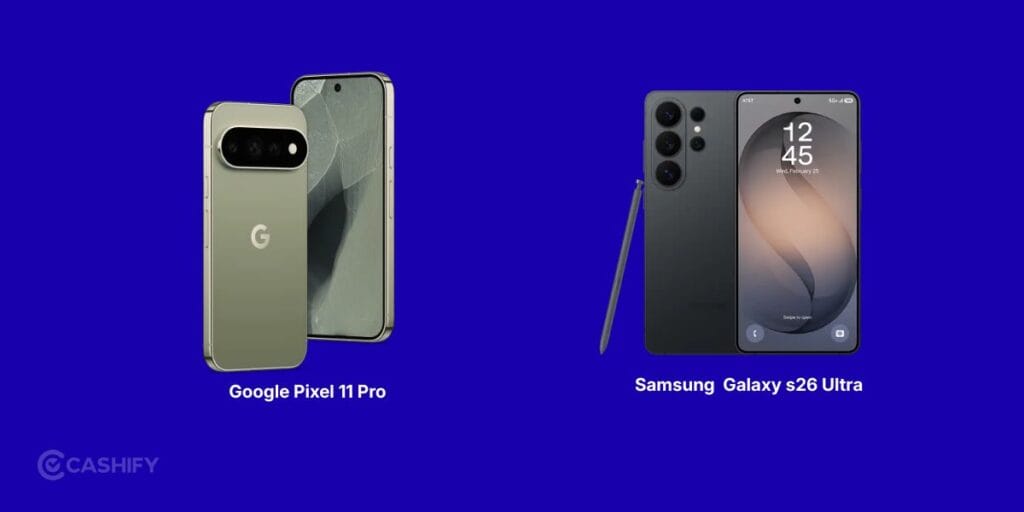
Google Pixel 11 Pro vs Samsung Galaxy S26 Ultra: Key Differences!
| Feature | Google Pixel 11 Pro | Samsung Galaxy S26 Ultra |
|---|---|---|
| Display | 6.3-inch LTPO OLED | 6.9-inch Dynamic LTPO AMOLED 2X |
| Refresh Rate | 1-120Hz | 1-120Hz |
| Peak Brightness | Up to 3,600 nits | Up to 2,600 nits |
| Processor | Google Tensor G6 | Snapdragon 8 Elite Gen 5 for Galaxy |
| RAM | 12GB/16GB | 12GB/16GB |
| Storage | Up to 1TB | Up to 1TB |
| Rear Cameras | 50MP + 48MP + 48MP | 200MP + 50MP + 10MP + 50MP |
| Front Camera | 42MP | 12MP |
| Battery | Around 4,850mAh | 5,000mAh |
| Wired Charging | Around 30-45W | 60W |
| Wireless Charging | 25W Qi2 | 25W |
| Software | Android 17 | Android 16 with One UI 8.5 |
| Stylus | No | Built-in S Pen |
| Water Resistance | IP68 | IP68 |
Design And Build: Pixel Is Easier To Handle
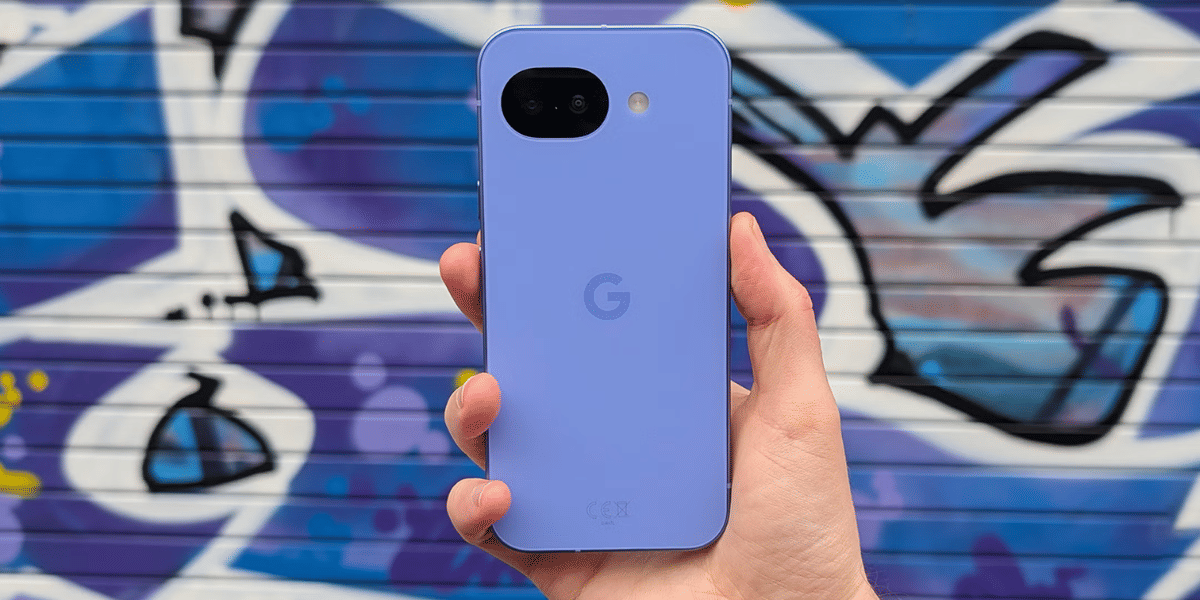
The Pixel 11 Pro is the more compact phone of the two. It measures around 152 x 72 x 8.4mm and weighs approximately 204g. It uses an aluminium frame with Gorilla Glass Victus 2 on the front and back and carries an IP68 rating.
Its smaller body is a big advantage if you dislike oversized phones. The familiar Pixel camera bar also gives it a distinctive appearance without making the phone feel unnecessarily bulky.
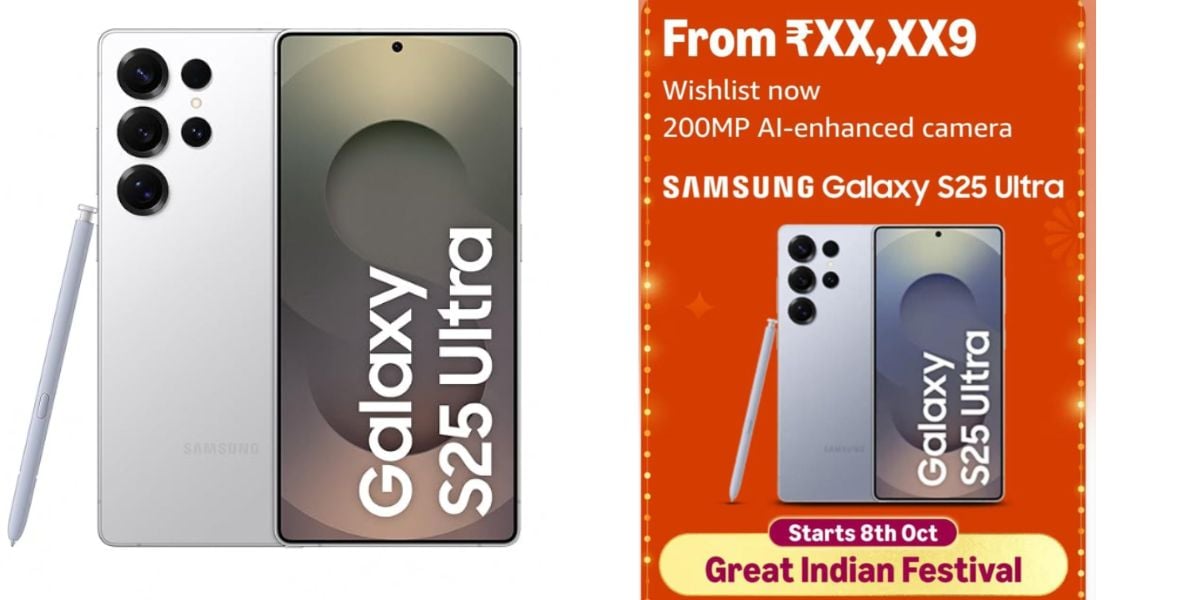
The Samsung Galaxy S26 Ultra is a much larger device at around 163.6 x 78.1 x 7.9mm and weighs roughly 214g. It uses an Armor Aluminum frame and Gorilla Armor 2 glass on the front. It is slightly thinner than the Pixel but feels much bigger in the hand.
Samsung also adds something Google does not: the built-in S Pen.
Winner: Google Pixel 11 Pro for comfort, Samsung Galaxy S26 Ultra for features.
If you want something that is easier to use with one hand, Pixel makes more sense. If you see your phone as a productivity device, the S26 Ultra has the clear advantage.
Display: Samsung Is Bigger, Pixel Is Brighter
The Pixel 11 Pro gets a 6.3-inch LTPO OLED display with a 1280 x 2856 resolution and a 1-120Hz adaptive refresh rate. Its biggest display advantage is brightness, with peak brightness reaching up to 3,600 nits.
That makes the Pixel particularly attractive if you spend a lot of time outdoors.
Samsung goes in the opposite direction with a massive 6.9-inch Dynamic LTPO AMOLED 2X panel. It has a 1440 x 3120 resolution, a 1-120Hz refresh rate and up to 2,600 nits of peak brightness.
Samsung also adds an interesting Privacy Display feature. It can narrow viewing angles to make your on-screen content harder for people beside you to see. That can be genuinely useful on trains, flights or in crowded places.
For watching movies, gaming and multitasking, the larger Samsung panel is hard to beat. For outdoor visibility, Pixel has the edge.
Winner: Samsung Galaxy S26 Ultra overall, Pixel 11 Pro for brightness.
Google Pixel 11 Pro vs Samsung Galaxy S26 Ultra Performance: Samsung Rocks It
The Google Pixel 11 Pro uses Google’s Tensor G6 chip, built on a 2nm TSMC process. It comes with 12GB RAM in the base configuration, while higher storage versions get 16GB RAM.
Google has focused heavily on AI and efficiency rather than simply chasing benchmark numbers. The Tensor G6 is designed to handle on-device AI tasks, Gemini features and computational photography efficiently.
The Galaxy S26 Ultra uses the Snapdragon 8 Elite Gen 5 for Galaxy, paired with 12GB or 16GB RAM. Samsung’s customised Snapdragon chip is more focused on raw performance and graphics power.
In normal daily use, both phones should feel extremely fast. The difference becomes more obvious during gaming, sustained workloads and heavy multitasking.
Winner: Samsung Galaxy S26 Ultra.
If you play demanding games or use your phone for intensive work, Samsung is the safer choice. Pixel’s advantage is the way its hardware and software work together for AI and everyday efficiency.
Software: Pixel Keeps It Simple, Samsung Gives You More
The Pixel 11 Pro runs Android 17 with Google’s clean Pixel software experience. There is little unnecessary software, and Google’s AI tools are deeply integrated into the operating system.
The Tensor G6 also helps Pixel push features. Gemini is a smarter photo editing and facilitates faster computational photography.
The Galaxy S26 Ultra runs Android 16 with One UI 8.5. Samsung’s interface is more feature-heavy, but that is also its biggest strength. You get extensive customisation, advanced multitasking and Samsung DeX. This combination can turn the phone into a desktop-like setup when connected to a compatible display.
Both phones are expected to receive around seven years of OS and security updates.
Winner: Tie, depending on what you want.
Pixel is better if you want a cleaner Android experience with AI at the centre. Samsung wins if you want more features and greater control.
Camera Comparison: Pixel vs Samsung’s Hardware
Camera performance is arguably the most interesting part of the Google Pixel 11 Pro vs Samsung Galaxy S26 Ultra battle.
The Pixel 11 Pro has a triple-camera setup:
- 50-megapixels main camera
- 48-megapixels ultrawide camera
- 48-megapixels 5x telephoto camera
- 42-megapixels front camera
Google continues to rely heavily on computational photography. The Pixel’s biggest strengths are consistent colours, HDR processing, portraits, low-light photography and point-and-shoot reliability.
It also supports AI-assisted zoom reaching up to around 120x.
Samsung takes a more hardware-heavy approach. The S26 Ultra has:
- 200-megapixels main camera
- 50-megapixels ultrawide camera
- 10-megapixels 3x telephoto
- 50-megapixels 5x periscope telephoto
- 12-megapixels front camera
The major advantage here is flexibility. You get both 3x and 5x optical zoom options, along with Samsung’s AI Space Zoom.
The 200-megapixels main camera can also capture a lot of detail when lighting conditions are right.
Which Phone Has the Better Camera?
For simple point-and-shoot photography, I would lean toward the Pixel 11 Pro. Google’s computational processing continues to be one of the strongest reasons to buy a Pixel.
Samsung is the better choice for photographers who want flexibility. The dedicated 3x and 5x telephoto cameras give you more options when shooting distant subjects.
The Pixel also has the advantage in selfie hardware with its 42MP front camera.
Camera winner: Pixel 11 Pro for still photography, Samsung Galaxy S26 Ultra for zoom versatility.
Battery and Charging: Samsung Charges Faster
The Pixel 11 Pro packs a battery of around 4,850mAh. Its Tensor G6 chip focuses heavily on efficiency, while the phone supports around 25W Qi2 wireless charging and Google’s Pixelsnap magnetic charging ecosystem.
Samsung uses a slightly larger 5,000mAh battery and supports 60W wired charging. Wireless charging is rated at 25W.
Both should comfortably handle a full day for many users with moderate usage. Samsung’s faster wired charging is the bigger practical advantage if you regularly need a quick top-up.
If you like magnetic wireless charging, however, Pixel’s Pixelsnap approach could be more convenient.
Winner: Samsung Galaxy S26 Ultra for charging, Pixel 11 Pro for the magnetic wireless ecosystem.
Features: Samsung Has the Bigger Toolbox
This is where Samsung’s Ultra strategy becomes clear.
The Galaxy S26 Ultra includes:
- Built-in S Pen
- Samsung DeX
- Privacy Display
- Multiple optical zoom cameras
- Large 6.9-inch display
- Extensive One UI customisation
- Strong Samsung ecosystem integration
The Pixel 11 Pro counters with:
- Deep Gemini integration
- Clean Android 17 experience
- Strong computational photography
- Brighter display
- 42MP selfie camera
- Qi2/Pixelsnap magnetic charging
- More compact design
Samsung simply gives you more tools. Pixel feels more focused.
Price: Google Pixel 11 Pro vs Samsung Galaxy S26 Ultra in India
For Indian buyers, the Google Pixel 11 Pro vs Samsung Galaxy S26 Ultra price gap is actually quite small right now. The Pixel 11 Pro was launched in India on August 12, 2026, with the 12GB + 256GB variant priced at Rs. 1,19,999. The higher 16GB + 512GB version costs Rs. 1,34,999.
The Galaxy S26 Ultra launched at a higher price in March 2026, starting at Rs. 1,39,999 for the 12GB + 256GB model. However, after several months in the market, its street price has dropped. The base model is currently available for around Rs. 1,24,999, depending on the retailer and ongoing offers.
| Phone | Base Variant | Current India Price |
|---|---|---|
| Google Pixel 11 Pro | 12GB + 256GB | Rs. 1,19,999 |
| Samsung Galaxy S26 Ultra | 12GB + 256GB | Rs. 1,24,999 |
So, the Pixel 11 Pro is currently around Rs. 5,000 cheaper than the discounted Galaxy S26 Ultra at the base level.
The Pixel 11 Pro also comes with launch benefits such as up to Rs. 10,000 instant cashback on eligible HDFC Bank credit card EMI transactions, an exchange bonus of up to Rs. 9,000 and no-cost EMI options for up to 24 months. When combined with eligible offers, the total potential savings can cross Rs. 39,000.
Samsung, on the other hand, has the advantage of being available in the market for longer. Buyers can find discounts, exchange bonuses, no-cost EMI and additional benefits through Samsung.com, Amazon, Flipkart and offline retailers. The Galaxy S26 Ultra 12GB + 512GB variant currently costs around Rs. 1,44,999 to Rs. 1,50,999, while the 16GB + 1TB model can be found around Rs. 1,74,999 to Rs. 1,80,999.
For Indian buyers, I would not look only at the sticker price. Check the final price after bank discounts, exchange bonuses and retailer-specific offers before choosing between the two.
Google Pixel 11 Pro vs Samsung Galaxy S26 Ultra: Final Verdict
If you like Google’s software and camera experience but prefer a larger phone, the Pixel 11 Pro XL is also worth considering. In India, it starts at Rs. 1,34,999 for the 12GB + 256GB model, while the 16GB + 512GB version costs Rs. 1,49,999.
With its 6.8-inch display and around 5,115mAh battery, the Pixel 11 Pro XL is a much closer alternative to the Galaxy S26 Ultra than the standard Pixel 11 Pro.
For now, the Pixel 11 Pro has the lower base price in India, but the Galaxy S26 Ultra can become more attractive after bank discounts and exchange offers. Since both phones are in the Rs. 1 lakh-plus segment, checking the effective price at the time of purchase can make a bigger difference than the official MRP.
If you’ve just bought a new phone and don’t know what to do with your old phone, then here’s your answer. Sell your old mobile to Cashify and get the best price for it. If you are planning to buy a new phone, check out Cashify’s refurbished mobile phones. You can get your favourite phone at almost half price with a six-month warranty, 15-day refund and free delivery.