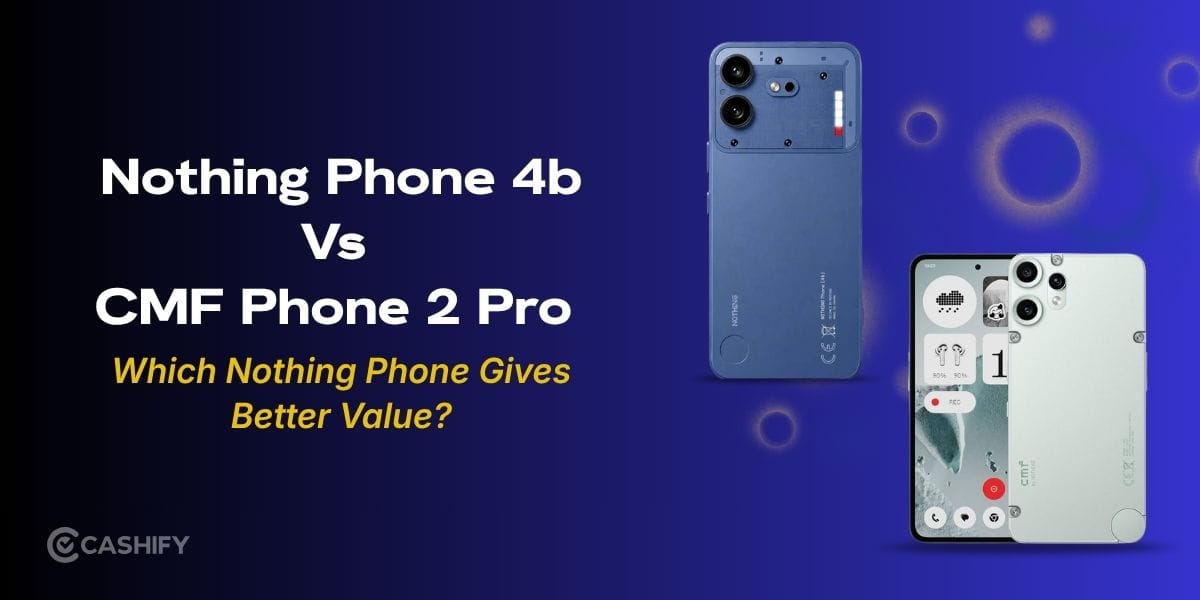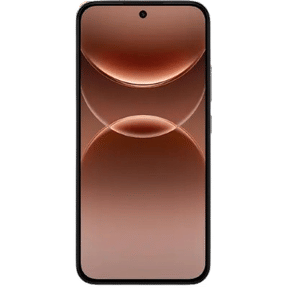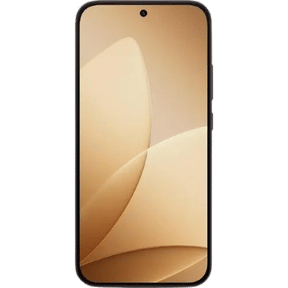


Nothing launched the Nothing Phone (4b) in India just the day before. But its newer model from Nothing has been causing confusion among buyers; is this really an upgrade? The previous model from Nothing, the Nothing Phone (4a), has a more powerful processor and better camera setup. The (4b) model has been designed with a focus on better battery life and affordability, but that is still not the case.
Is the battery life and refreshing design enough for you to buy the (4b) model over the older (4a) model? Let’s do a quick comparison between the Nothing Phone (4b) vs Nothing Phone (4a).
Nothing Phone (4a) vs Nothing Phone (4b) Price In India
Before comparing the specifications, let’s look at the Indian pricing.
The Nothing Phone (4b) starts at Rs. 34,999 for the 8GB RAM + 128GB model, while the 8GB + 256GB variant costs Rs. 38,999. With bank offers, the effective prices drop to Rs. 29,999 and Rs. 33,699, respectively.
Meanwhile, the Nothing Phone (4a) starts at around Rs. 35,999 for the 8GB + 128GB variant, while the 8GB + 256GB model is available from around Rs. 39,599, depending on offers and retailers. The price difference between the two phones is surprisingly small, making the comparison even more interesting.
Also Read: I Spent A Day With The Vivo X300 FE Camera: Here’s How It Sees The World
Nothing Phone (4a) vs Nothing Phone (4b): Specs At A Glance
| Specification | Nothing Phone (4a) | Nothing Phone (4b) |
| Launch Date | March 13, 2026 | July 7, 2026 |
| Starting Price | Rs. 35,999* | Rs. 34,999 |
| Display | 6.78-inch AMOLED, 1224p, 120Hz | 6.77-inch AMOLED, FHD+, 120Hz |
| Peak Brightness | 4,500 nits | 2,000 nits |
| Processor | Snapdragon 7s Gen 4 | Snapdragon 6 Gen 4 |
| RAM & Storage | 8GB RAM, 128GB/256GB UFS 3.1 | 8GB RAM, 128GB/256GB UFS 2.2 |
| Rear Cameras | 50MP + 50MP Periscope + 8MP Ultra-wide | 50MP + 8MP Ultra-wide |
| Front Camera | 32MP | 16MP |
| Battery | 5,400mAh | 6,000mAh |
| Charging | 50W Wired + 7.5W Wireless | 33W Wired |
| Software | Android 16, Nothing OS 4.1 | Android 16, Nothing OS 4.1 |
| Protection | IP64 | IP64 |
Nothing Phone (4a) vs Nothing Phone (4b): Design and Display
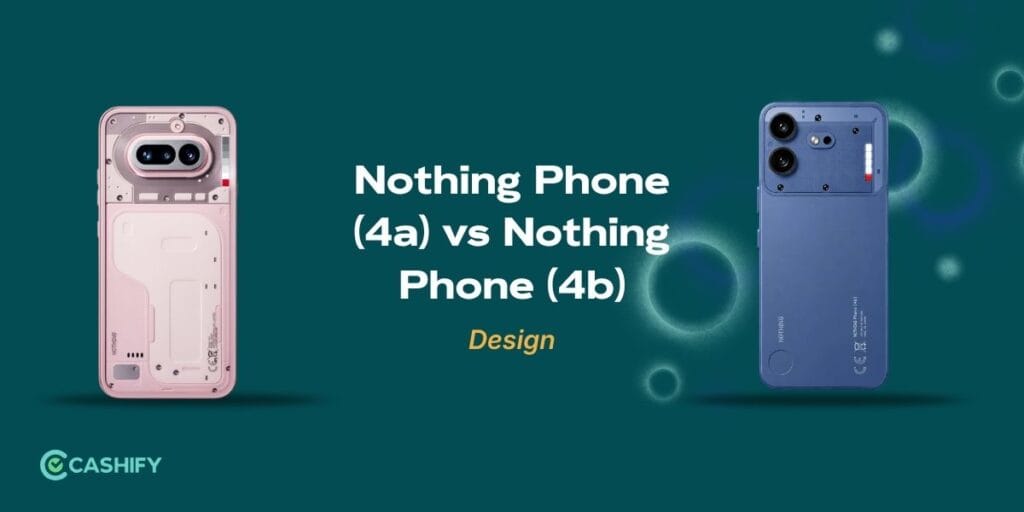
At first glance, both appear almost identical in core design. Both smartphones have Nothing’s Glyph lighting on the rear, flat edges, and a design that is a cross between a transparent phone case and a minimalist style.
The Phone (4a) is slightly nicer due to the slimmer profile and glass back. In contrast, the Phone (4b) uses a plastic back to save costs; therefore, it is a bit thicker and heavier as it has a bigger battery. The differences between the phones become more noticeable when looking at the screens.
The Phone (4a) has a 6.78” AMOLED display with a 1224 x 2720 resolution, an upgrade that includes HDR10+ certification and an incredible peak brightness of 4,500 nits. The display found on the Phone (4b) is a 6.77” Full HD+ AMOLED display that is capped at a peak brightness of 2,000 nits.
Both displays are capable of 120Hz refresh rates, but the Phone (4a) display is both more advanced and offers a better outdoor experience, displaying a more premium viewing experience. In short, Nothing Phone (4a) has the better display.
Also Read: Redmi Turbo 5 Review: Redmi’s Best All-Rounder Yet?
Nothing Phone (4a) vs Nothing Phone (4b): Camera and Battery
The biggest difference is in the camera. The Nothing Phone (4a) has three cameras. The main camera has 50MP, and the other two cameras are a 50MP periscope telephoto lens with 3.5x optical zoom, and an 8MP ultra-wide camera. The Phone (4b) gets rid of the telephoto lens, which means that there is now just a 50MP main camera and an 8MP ultra-wide camera.
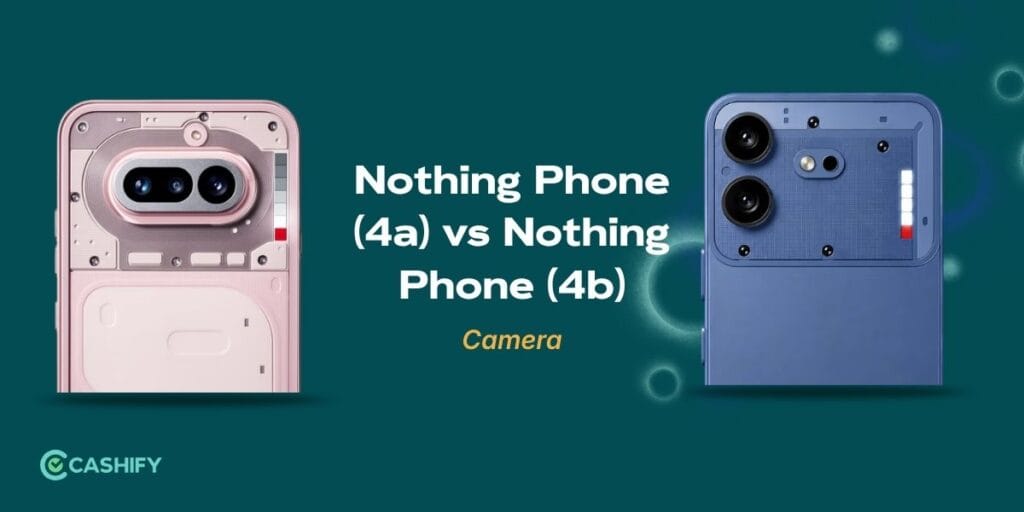
If you are into photography, this is a big downgrade. The Phone (4a) can take good portraits and zoom shots, and is overall more versatile. The Phone (4a) also wins for the front camera, as it has a 32MP camera, while the Phone (4b) has a 16MP camera.
The Phone (4b) wins for battery. It’s because the Phone (4b) has a 6,000mAh battery, while the Phone (4a) has a 5,400mAh battery. However, the Phone (4a) is better in terms of charging, though, since it has 50W wired and 7.5W wireless, while the Phone (4b) only has 33W wired. If you care more about battery, go with the Phone (4b). But for cameras and charging, the Phone (4a) is better.
Also Read: Poco X8 Pro Max Review: The Battery Beast Gamers Will Love
Nothing Phone (4a) vs Nothing Phone (4b): Performance and Software
The Phone (4a) is also a winner in the performance department. The Phone (4a) has the upper hand with the Snapdragon 7s Gen 4 compared to the Phone (4b)’s Snapdragon 6 Gen 4. As we all know, the 7s Gen 4 offers better CPU and GPU performance, making it a stronger choice for gaming, multitasking, and demanding apps.
The Phone (4a)’s UFS 3.1 storage also gives a performance boost with faster app and file load times, including in-game files. The Phone (4b) has UFS 2.2, which is slower and noticeably impacts day-to-day usage.
Both phones run the same Nothing OS 4.1, based on Android 16, and will receive the same software updates. Nothing also provides users with a clean UI and features, including Essential Space and other AI features. Take the Phone (4a) if performance is your priority. This includes gaming and multitasking.
Also Read: Realme 16T Review: A Confusing Addition To The Realme 16 Series
Verdict
While the Nothing Phone (4b) is the newer device, it isn’t an upgrade to the Nothing Phone (4a). (4b) is more of a budget phone with trade-offs to performance, screen, cameras, charging, and storage, among other things. Phone (4b) has a good-sized 6000mAh battery and, after some bank offers, an effectively lower price, so you can get the (4b) if you want a discount and a phone with a good battery.
If you can stretch your budget a little more, Nothing Phone (4a) is the better buy with a faster Snapdragon 7s Gen 4 processor, faster charging, storage, a better screen and better cameras. If you want a decent phone that saves you a lot of money, get the Nothing Phone (4b). If you want a phone that is better in almost every single way, get the Nothing Phone (4a).
Are you still browsing through your broken screen? Don’t worry! Book an at-home mobile phone screen repair with Cashify—an affordable and one-stop destination for all your mobile phone needs. In case you break your screen within 1 month of repair, we will replace your screen again—for FREE.